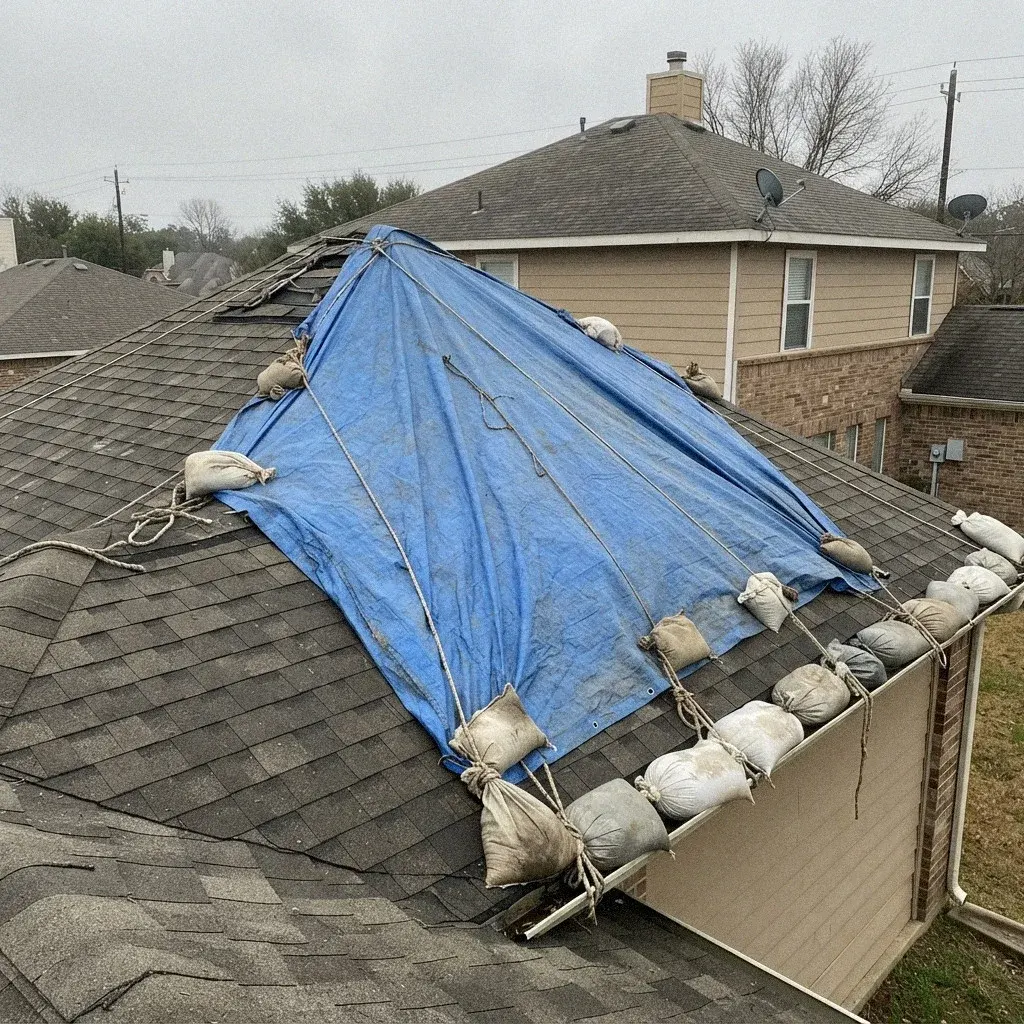
Emergency Roof Tarping
An open roof covered and anchored today, before the next rain finds it.
Learn about Emergency Roof TarpingA separate Hennepin County suburb south of Minneapolis, built around the Mall of America.
Bloomington is its own city, south of Minneapolis, running from the Minnesota River valley up to the Richfield and Edina lines. It built out mainly through the postwar decades, so the housing is ramblers and split-levels on wide lots rather than the pre-war bungalows found in the city. Its permits and inspections go through Bloomington, not Minneapolis.
Freeze-thaw cycles, heavy snow load, and ice dams stress a roof more than any single storm, year over year.
Whatever the vintage in Bloomington, the same handful of joints do the failing: the valley, the step flashing where a roof meets a wall, the chimney counterflashing, the boot around a plumbing vent. Rubber goes hard through enough winters, and hard rubber splits.
Proximity to Minnesota River and Nine Mile Creek means the exterior takes more punishment. Swollen fascia, failed caulk at the trim, and rot in the sill ends of a soffit all open up paths for water, and none of them start on the roof itself.
Bloomington sits under the same Hennepin County snow load and frost-depth footing rules as Minneapolis, so ice dams and hail from summer thunderstorms hit roofs here the same way. Basements complicate how homeowners read roof damage here. A leak at the roofline can take days to show as a stain two floors down, so by the time it's visible inside, the water has usually been moving for a while.
Because of Mall of America, there is a steady stream of non-residential work in Bloomington. On an occupied building the constraint is rarely the roof - it is getting equipment up there without shutting the business underneath.
Local pricing, openly published. The written estimate for your own property always comes before any work is booked.
| Service | Estimated cost |
|---|---|
| Emergency Roof Tarping | an estimated $350–$1400 |
| Flashing & Chimney Repair | an estimated $350–$1900 |
| Flat & Low-Slope Roofing | an estimated $9000–$26000 |
| Gutter Repair & Replacement | an estimated $1200–$4800 |
| Gutter Cleaning & Gutter Guards | an estimated $175–$500 |
Fort Snelling sits at Bloomington's northern edge near the Mississippi and Minnesota River confluence, a landmark separating the older river-bluff blocks from the subdivision streets built out further south.
The Mall of America anchors Bloomington's commercial core near the airport, with surrounding frontage roads and arterials distinct from the residential cul-de-sac streets found deeper into the city's housing stock.
Richfield borders Bloomington to the north along I-35W, a neighboring Hennepin County city with its own separate build era and housing stock rather than a shared subdivision or plat.
An open roof covered and anchored today, before the next rain finds it.
Learn about Emergency Roof Tarping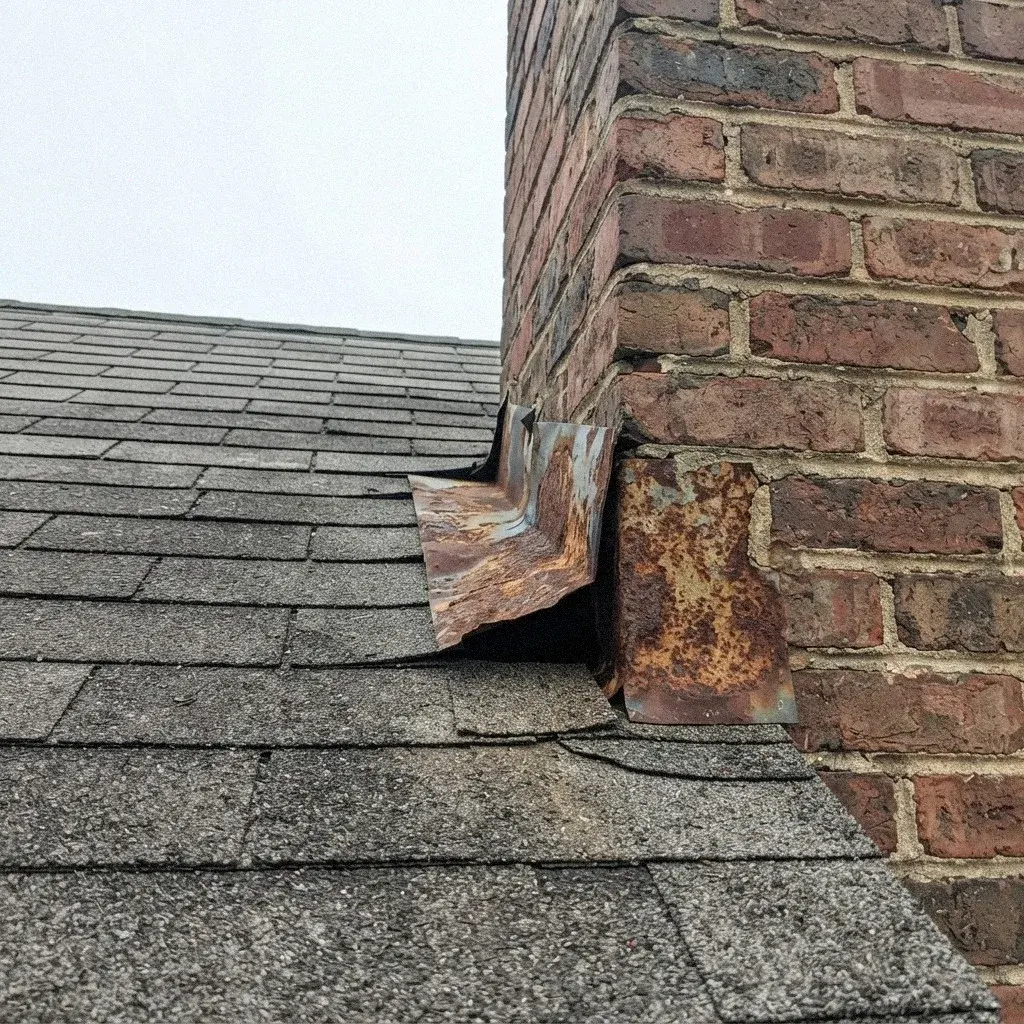
Repairing the metal seals at your chimney, valleys, and walls.
Learn about Flashing & Chimney Repair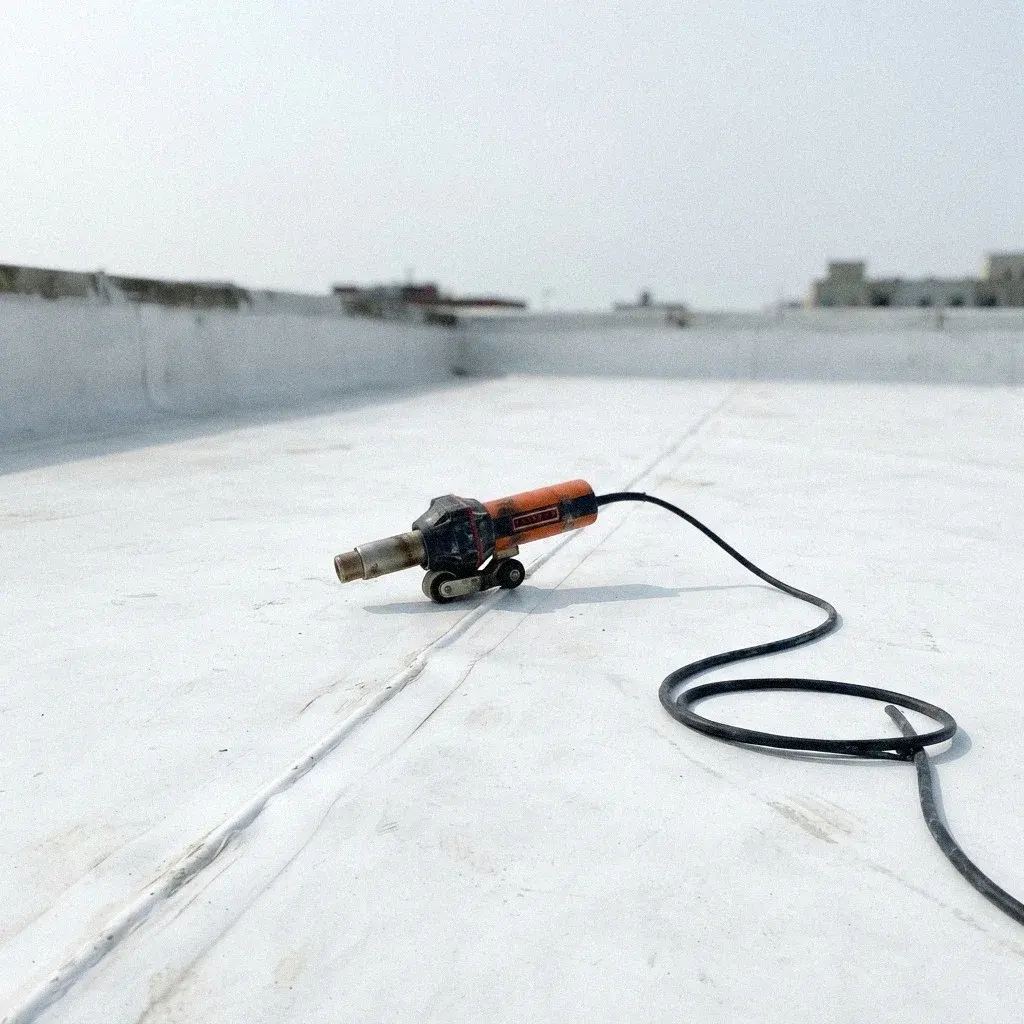
Low-slope membrane roofing built to drain through a Minnesota winter.
Learn about Flat & Low-Slope Roofing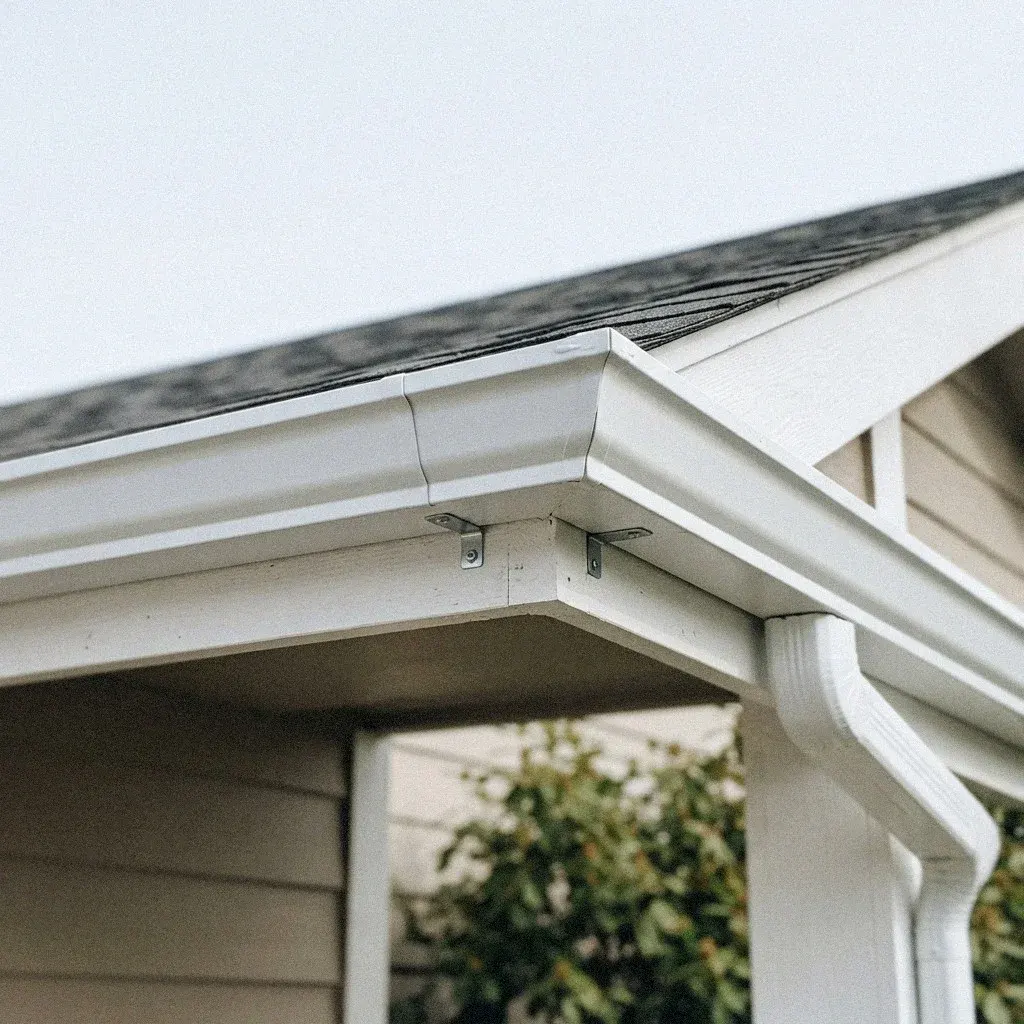
Straight talk on whether your gutters need fixing or full replacement.
Learn about Gutter Repair & ReplacementDowntown West · Downtown East · Loring Park · Linden Hills · Fulton · Kingfield · Longfellow · Edina
Newer than the city's, which changes the whole picture. Bloomington built out mainly through the postwar decades, so the housing runs to ramblers and split-levels rather than the pre-1940 bungalows and foursquares that dominate Minneapolis. A lot of those roofs are now on a second or third covering. The shape matters as much as the age: a long low rambler roof with wide eaves behaves differently through a Minnesota winter than a steep city attic does.
Bloomington is its own city with its own building department, separate from Minneapolis, so permit requirements and inspection steps are set locally rather than by Minneapolis. Homeowners should confirm current permit rules directly with Bloomington's building department before scheduling reroofing work, since this site does not have confirmed permit fee or process details for the city.
The same way they form anywhere here, but the roof shape changes where. A rambler's low pitch and wide overhang give meltwater a long, cold run to travel before it leaves the roof, so ice builds along a broad stretch of eave rather than at one corner. The cause is still attic heat reaching the deck. Insulation depth and whether the soffit vents are actually clear decide it far more than the covering on top does.
They make it easier, which is not something you can say about much of this trade. Bloomington's postwar streets have wider lots and proper driveways, so a dumpster and a material stack usually go where they are needed without negotiating an alley or blocking anyone in. Compare that with an alley-loaded city block where staging has to be worked out in advance. It rarely changes the price much, but it does make scheduling simpler and the working day shorter.
Coverage from this site includes Hennepin County communities such as Richfield and Edina, both bordering Bloomington, along with Minneapolis neighborhoods further north along the I-35W corridor. Homeowners near the Minnesota River or Fort Snelling area are within the same general service radius as these listed communities.
There is a round-the-clock emergency line covering Bloomington, so a call at 2am reaches a person rather than a voicemail. Being a short drive from Minneapolis, most standard bookings still land the same day or the next. You get an honest arrival window when you book instead of a vague promise.
Minneapolis roofs answer to the same winter, but not identically. A foursquare in Tangletown with tight attic ventilation ice-dams differently than a bungalow near Lake Nokomis with more roof exposed to open sky. Homes close to the Mississippi River gorge catch different wind than ones tucked into Fulton or Kingfield. Hail from a summer thunderstorm hits every neighborhood the same day, but the roof underneath it, its age, its pitch, its attic insulation, is never quite the same house to house.
Call (612) 493-0152