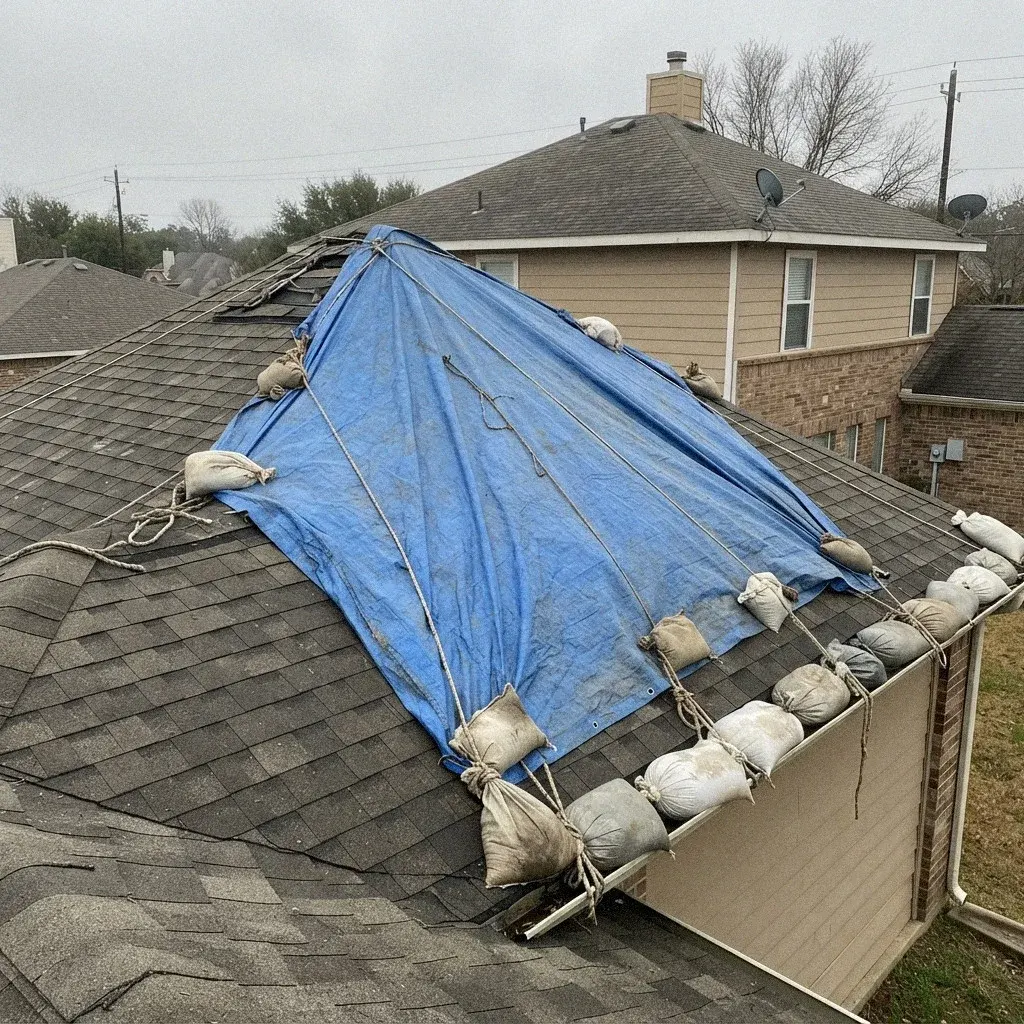
Emergency Roof Tarping
Open roof? A local licensed pro covers and anchors it, often the same day, before the next rain finds it.
Learn about Emergency Roof TarpingA separate suburb bordering Minneapolis, not annexed into it, with its own permit desk.
St. Louis Park borders Minneapolis on the west side, sharing a boundary near Cedar Lake and West Maka Ska rather than sitting inside Minneapolis city limits itself. Highway 100 runs along its eastern edge, and Excelsior Boulevard connects it straight into the Bde Maka Ska-Isles area, a short arterial run for anyone crossing between the two.
Freeze-thaw cycles, heavy snow load, and ice dams stress a roof more than any single storm, year over year.
Roofs in St. Louis Park are judged on their attics as much as their shingles. Warm air escaping into a cold attic melts snow on the upper slope, and it refreezes at the eave where there is no heat underneath. That ridge of ice is what pushes water back up under the courses.
Cedar Lake keeps the air damp around the properties closest to it, and damp air on a shaded slope is what moss lives on. The north face is usually the one that needs clearing years before the rest of the roof does.
Being just west of the Mississippi River corridor rather than along it, St. Louis Park sees the same Minnesota winter load and summer thunderstorm hail as Minneapolis, without any river-adjacent flooding exposure changing the picture. Basements complicate how homeowners read roof damage here. A leak at the roofline can take days to show as a stain two floors down, so by the time it's visible inside, the water has usually been moving for a while.
With Methodist Hospital in the area, a good share of the St. Louis Park work is commercial - and a commercial roof is a different job. Low-slope membrane, roof access booked in advance, and work staged around the tenants below.
Most St. Louis Park jobs land inside these ranges. The inspection is free and the exact figure comes in writing before anything starts.
| Service | Estimated cost |
|---|---|
| Emergency Roof Tarping | an estimated $350–$1400 |
| Roof Leak Repair | an estimated $450–$2400 |
| Storm & Wind Damage Roof Repair | an estimated $900–$7500 |
| Roof Repair | an estimated $400–$2200 |
| Flashing & Chimney Repair | an estimated $350–$1900 |
Cedar Lake marks part of the boundary area near St. Louis Park, and the tree cover surrounding it keeps roofs nearby shaded enough that needle and leaf debris becomes a recurring gutter concern each fall.
Excelsior Boulevard carries the commercial frontage through this side of St. Louis Park, and the buildings along it are low-slope rather than pitched. That matters for the houses set behind them too: the streets closest to the corridor tend to be the older stock, built before the postwar expansion further out, so roofs there are further through their service life.
Highway 100 runs along St. Louis Park's eastern edge, the practical dividing line where Minneapolis city limits give way to the neighboring suburb's own school district and municipal services.
Open roof? A local licensed pro covers and anchors it, often the same day, before the next rain finds it.
Learn about Emergency Roof Tarping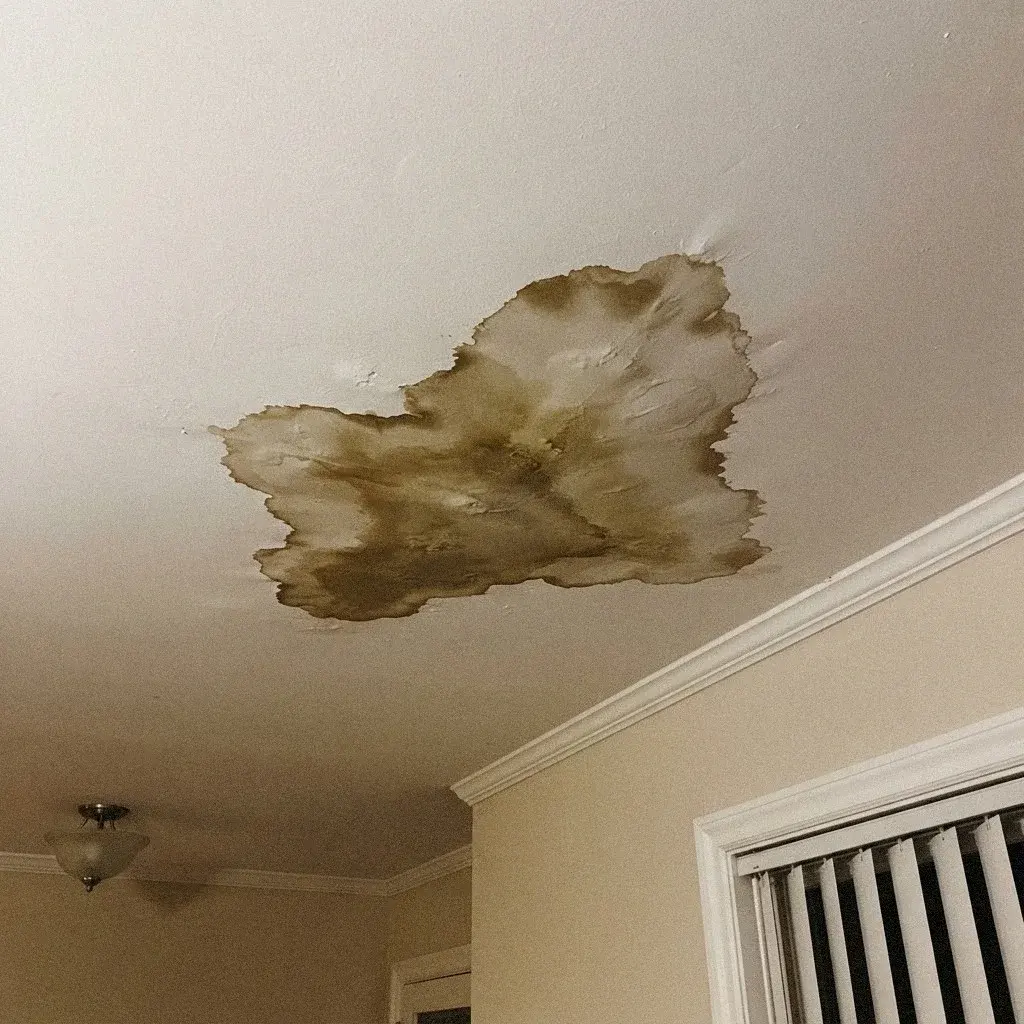
Call now to reach a local licensed pro who traces your leak to its real entry point and fixes it.
Learn about Roof Leak Repair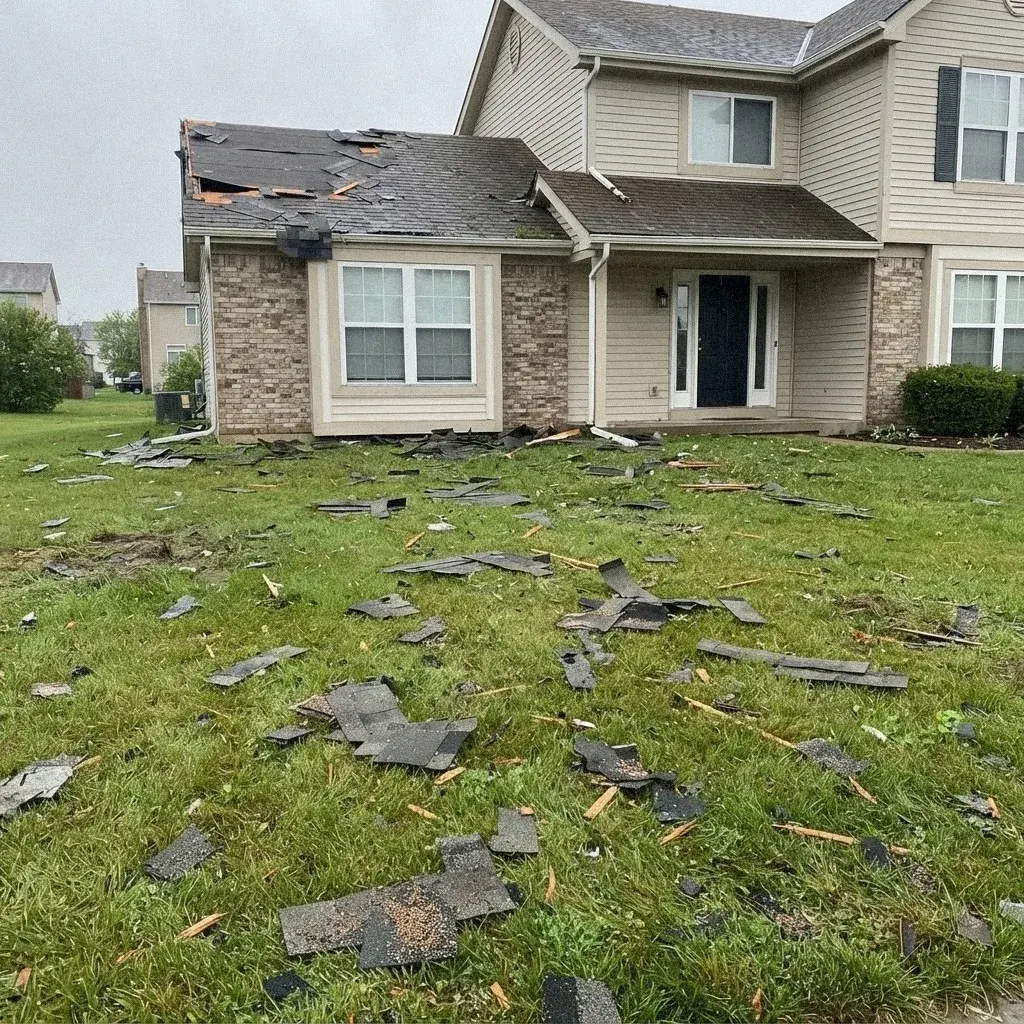
Fast inspection and repair after high wind, hail or falling limbs, by a local licensed pro.
Learn about Storm & Wind Damage Roof Repair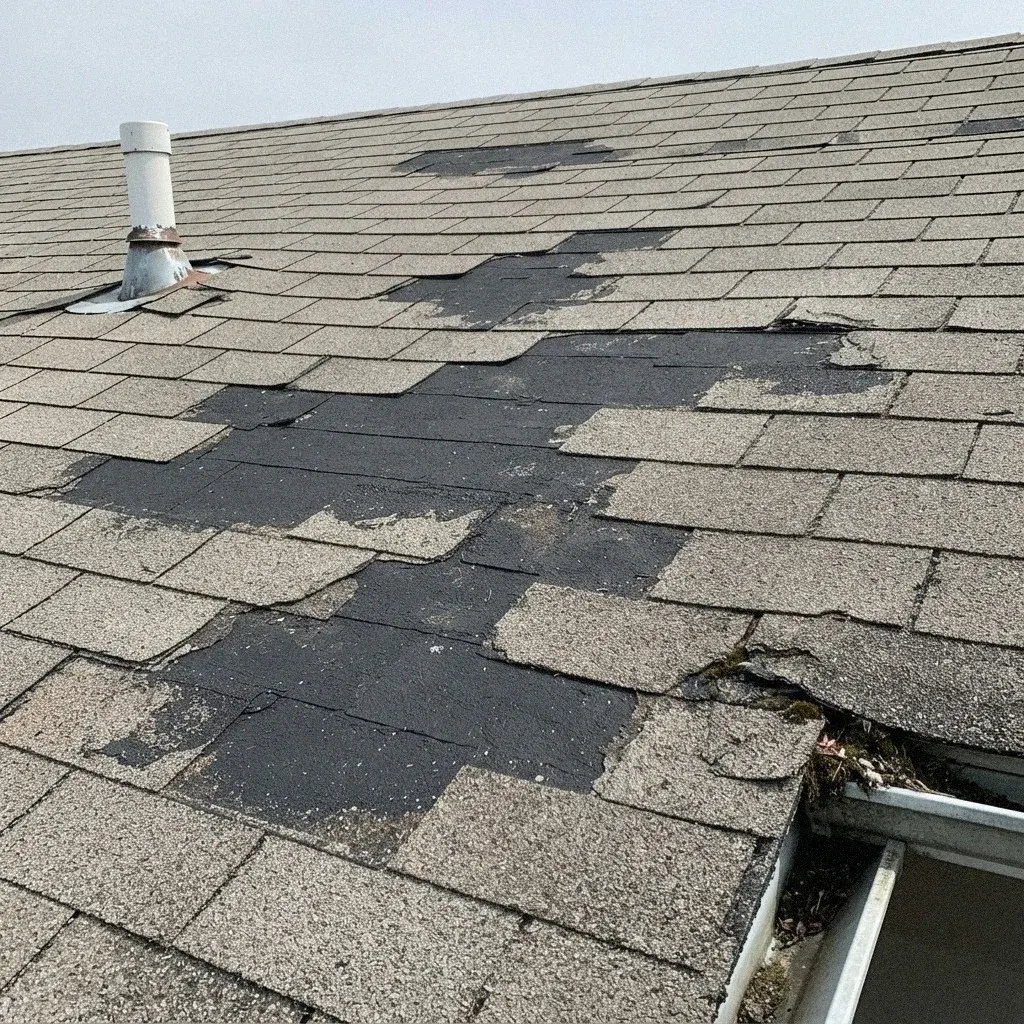
Local licensed pros fix the damaged spot, not the whole roof, and put the scope in writing first.
Learn about Roof RepairSt. Louis Park sits just outside Minneapolis city limits, so the licensed pros we connect you with cover both sides of that border, including the Highway 100 corridor and streets near Cedar Lake, without treating the boundary as a service gap.
Yes, and it goes through St. Louis Park rather than Minneapolis. That is the part worth getting right: St. Louis Park is a separate city with its own building department, its own counter and its own rules, and Minneapolis's do not carry across the line. If you are comparing a quote from a contractor who mainly works in the city, ask which counter they will be filing at. Confirm the scope against St. Louis Park's own requirements before anyone starts.
Mid-century homes built in the 1940s and 1950s, common on both sides of the St. Louis Park border, have had decades of Minnesota winters to work at the original roofing. Ice dams and frost heave over that many seasons wear down flashing and decking faster than on newer construction.
Asphalt shingle covers most of the single-family housing stock here, matching the bungalow and Cape Cod-style homes found across the border in nearby Minneapolis neighborhoods. Some older homes carry slate or standing-seam sections, but shingle remains the dominant covering on these streets.
For an active leak, quickly, because that is treated as urgent whatever the address. For a routine look, usually a few days. St. Louis Park sits right against the city's western edge so the drive is short, and inspections out this way tend to be grouped into the same run rather than made as separate trips. The season matters more than the distance: after a hail storm every book in the metro fills within days.
There is a round-the-clock emergency line covering St. Louis Park, so a call at 2am reaches a person rather than a voicemail. Being a short drive from Minneapolis, most standard bookings still land the same day or the next. You get an honest arrival window when you book instead of a vague promise.
Minneapolis roofs answer to the same winter, but not identically. A foursquare in Tangletown with tight attic ventilation ice-dams differently than a bungalow near Lake Nokomis with more roof exposed to open sky. Homes close to the Mississippi River gorge catch different wind than ones tucked into Fulton or Kingfield. Hail from a summer thunderstorm hits every neighborhood the same day, but the roof underneath it, its age, its pitch, its attic insulation, is never quite the same house to house.
Call (612) 493-0152