Now taking calls — fast callback for urgent roof damage · (612) 493-0152
Emergency Roof Tarping in Minneapolis, MN
Minneapolis, MN

Same-Day Tarping for an Open Roof in Minneapolis, MN

An open roof covered and anchored today, before the next rain finds it.

Whether you're in Downtown West, Downtown East, Loring Park, or elsewhere around Minneapolis, emergency roof tarping is arranged around the conditions on the ground in and around Minneapolis, so the plan fits the building rather than a template.

This is most often a home job — residential roofing sets out what that involves, or see commercial roofing if the property is a business or a rental.

Warning Signs

Signs You May Need Emergency Roof Tarping

Active Leak During a Storm

Most calls come from a Minneapolis attic that's suddenly taking water — a stain crossing a bedroom ceiling in Longfellow, or drips landing near a stairwell in a Tangletown foursquare after a thunderstorm rolls through. The roof stayed intact for years, then a branch, hail, or wind opened a section fast. Whatever the trigger, water intrusion doesn't wait for a scheduled repair visit, and neither should the response.

Failures With No Storm at All

Not every tarp call follows a storm. A chimney flashing fails quietly in a Kingfield bungalow, a valley rots out over a Seward garage addition, or a tear-off in Prospect Park gets rained on before the new roof goes down. Any of these leaves decking exposed with no plan to close it before the next front moves through the Twin Cities metro.

A Gap Over Bare Decking

Size matters less than exposure time. A narrow gap over bare decking near Powderhorn Park can pull in as much water over a soggy week as a larger hole does in one hard downpour. Left uncovered through even a couple of Minneapolis storm systems, that gap turns into soaked insulation and a ceiling repair that didn't have to happen.

How It Works

Our Emergency Roof Tarping Process

Taking the Call in Minneapolis

The first call establishes what is happening right now: whether water is coming into living space, roughly where on the house, and whether anybody needs to stay out of a room. That decides where you sit in the queue. Your address, the roof pitch, and how you got up to look also get noted, because they decide what equipment turns up.

Reading the Damage on the Roof

On arrival the roof gets read before anything gets covered. How far the opening extends, whether the decking around it is still sound, and where the water is going once it gets in all change how far the tarp has to reach. A tarp that stops short of the real edge of the damage simply moves the leak a few feet.

Anchoring the Tarp to Hold

The tarp gets wrapped around wood battens and screwed down through them into the deck, so every fastener hole sits under wood rather than open to weather. The top edge runs above the damage, over the ridge where the layout allows, so water cannot work in behind it. Minneapolis wind decides whether a tarp lasts a night or a month, and anchoring is the whole difference.

Lining Up the Permanent Repair

Before the truck leaves, the damage gets photographed with the date on it and the permanent scope gets sketched out: what has to come off, whether decking is involved, and what the attic looked like. A tarp buys weeks, not seasons, so the repair goes on the calendar at this point rather than being left to a later phone call.

Why this matters

Minneapolis basements sit below frost-depth footings, but the attic above them is where an open roof does its damage fast — soaking joists and insulation that were never built to handle standing water. Bungalow and foursquare attics common across the city often run tighter on airflow than current homes, so trapped moisture from an unpatched leak lingers instead of drying out between storms.

Licensing & Local Standards

Code-Compliant Emergency Roof Tarping in Minnesota

A Bridge to the Permanent Fix

Emergency tarping in Minneapolis is never sold as the fix — it buys time until the roof can be permanently repaired. A reinforced poly tarp goes over the opening, sized to reach well past the damaged section onto roofing that's still sound, so wind can't work a loose edge back toward the hole. The goal is a dry attic, not a finished job.

Matching the Anchor to the Roof

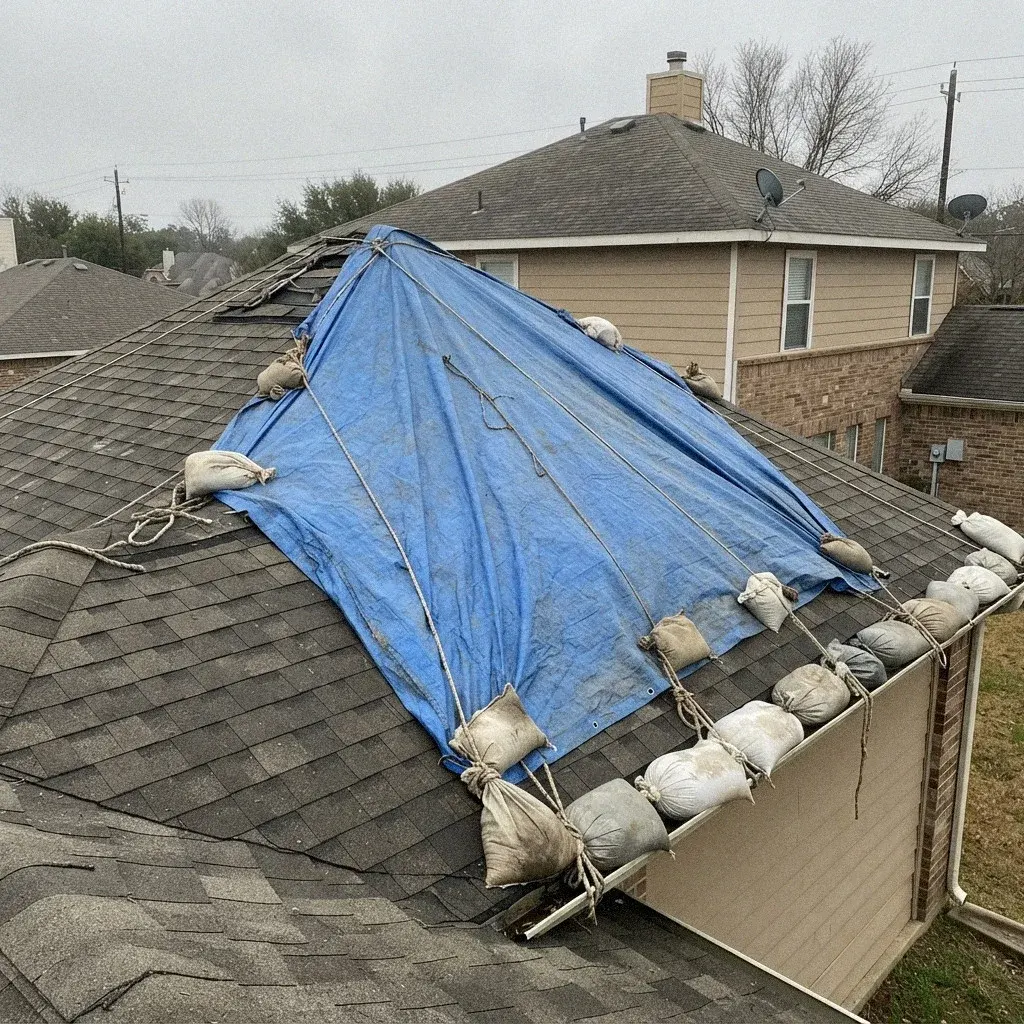
How a tarp gets anchored depends on what's under it. On the steep-pitched roofs common across bungalows and foursquares near Lake Nokomis, furring strips or battens are screwed through the tarp into rafters or solid decking, not just into shingles that could tear loose. On lower-slope sections, sandbags along the edges add hold without punching extra holes into a roof that's already compromised.

Pricing

Emergency Roof Tarping Prices in Minneapolis, MN

These are the figures quoted most often for emergency roof tarping. The size of the roof, its pitch, and how easy it is to get a ladder to move the number.

What emergency roof tarping typically runs locally
DLI LicenseInsurance ProofPayment Terms
Paying the roofing contractor in full doesn't automatically clear a homeowner if a supplier who delivered shingles to the property, whether in Kingfield or Tangletown, never got paid. A supplier or subcontractor left unpaid can still file a lien against the house. Flashing resealed around chimney and vents, shingles left alone an estimated $245–$1330
A lien waiver from the contractor, and from any supplier who delivered material to the address, is the document that closes that risk. Ask for them at final payment rather than a month afterwards, when the crew has moved on to the next job and the paperwork is somebody else's problem. Tear-off plus soffit vents added, no insulation added above attic an estimated $350–$1820
Minneapolis requires a permit for roofing work, and it is normally pulled in the contractor's name and closed out with an inspection. That record stays attached to the property rather than to whoever lived there, so an open permit has a habit of surfacing years later during a sale. Full tear-off, deck replaced where rotted, ice barrier along all eaves an estimated $455–$2520
The paperwork behind a Minneapolis reroof, lien releases, permits where they apply, warranty terms in writing, isn't the interesting part of the job. Skipping it is how a roof that looks finished from the street turns into a dispute months later. Foursquare-scale tear-off, permit filed with the city, haul-away included an estimated $630–$3640

A low bid usually means a shortcut, not savings. Skipping ice-and-water barrier, proper flashing, or full tear-off disposal costs the crew money, so a number well below everyone else's is a sign something got left out of the scope, not a sign of a better deal.

Questions & Answers

Frequently Asked Questions

How fast can someone tarp my Minneapolis roof today?

It depends on the weather and how many other houses are calling. After a storm that crossed the metro, tarping crews work a queue, and the roofs with water actively coming into living space go first. On an ordinary day, same-day is normal. What holds it up is not scheduling but conditions: nobody goes onto a wet, iced, or wind-loaded slope, so an overnight wait for the wind to drop or the ice to be cleared is a safety call rather than a delay. Call as early in the day as you can, because daylight is the real limit in a Minneapolis winter.

How does the tarp actually stay attached to my roof?

Not with weights, and not by being tucked under shingles. A proper tarp is wrapped around furring strips, wood battens, and those are screwed down through the tarp into the deck, so the fastener holes end up under wood rather than open to the sky. The top edge runs over the ridge or well above the damage so water cannot get behind it, and the sides are anchored the same way. It leaves screw holes, which is expected: they get covered by the permanent repair. A tarp weighted with bricks or nailed only at the corners is the kind that ends up in the neighbor's yard by morning.

How many weeks will a temporary roof tarp last?

A tarp anchored this way is built to hold for weeks, not days, carrying a Minneapolis roof through several rounds of spring rain or a stretch of summer thunderstorms without needing a redo. It isn't rated as a permanent covering through an entire winter of snow load and freeze-thaw cycling, but it's far sturdier than anything bought off a hardware store shelf.

What happens once the tarp is secured on my roof?

The clock stops on new water coming in, and that is all a tarp is for. Next comes the record: photographs of the damage, the date, and what was done, which is what an insurance claim runs on. Then the permanent repair gets scoped, and that usually means someone looking in the attic at how far the water got and whether any decking has gone soft. A tarp is a temporary measure with a shelf life measured in weeks, not months. Minneapolis wind and snow load will find its weak point eventually, so the repair wants scheduling rather than putting off.

Can a roof get tarped after dark or during rain?

Sometimes, and it comes down to whether the slope is safe to stand on. Light rain on a low-pitch roof with work lights set up is workable. Steady rain on a steep slope, standing water, ice, snow, or wind is not, and no reasonable crew will attempt it. In a Minneapolis winter, darkness arrives early and takes the temperature with it, so the practical answer between December and March is often first light rather than tonight. In the meantime the useful work is inside: buckets under the drip, furniture moved, and a small hole poked in a bulging ceiling so the water has somewhere to go.

Does tarping stop damage already done inside my house?

No. A tarp closes the opening; it does nothing about the water already in the building. Wet insulation stays wet, soaked drywall keeps sagging, and in a cold attic none of it dries on its own. That part is a separate job, usually a water restoration one: pulling out the wet insulation, opening the ceiling if it is holding water, and drying the cavity before mold gets started. The sooner the tarp goes on the smaller that job is, which is the real argument for same-day tarping rather than waiting until a repair can be scheduled.

How much does emergency roof tarping cost in Minneapolis?

A leaking roof falls under a landlord's general duty to keep a rental in reasonable repair under state law, though no statute spells out a fixed number of days to fix it. Owners of a house they live in face a different set of questions entirely, mostly about timing and cost.

Related Reading

Guides on Emergency Roof Tarping

A roof in Minneapolis rarely gives out from one storm. It gives out from a winter that packed snow into an ice dam, then a spring thaw that found the gap that dam opened. Each freeze cycle after that widens the same weak spot until a ceiling stain finally makes the case plain.

Checking Storm Damage After Hail | Minneapolis
Local & Seasonal

Checking Storm Damage Without a Ladder in Minneapolis, MN

After a Minneapolis hailstorm, most of the real damage is on the roof, not the ground. Here is what a homeowner can check from the yard, and why the camera matters more today than it will in a week.

Read article
Where Minneapolis Roof Leaks Usually Start
Roof Problems

Common Roof Leak Entry Points in Minneapolis

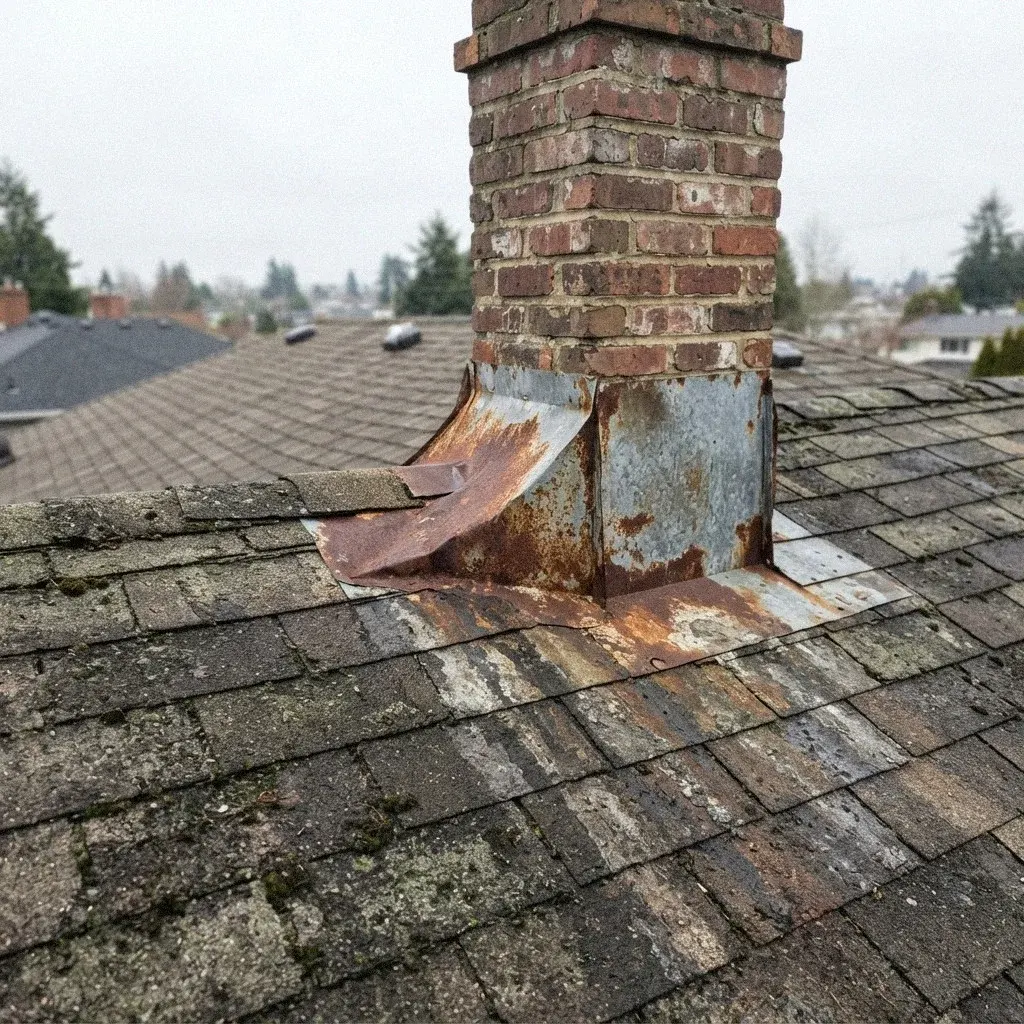
A Minneapolis roof leak rarely comes from worn-out shingles. It comes from a specific joint, valley, or flashing detail. Here's a ranked look at where these leaks actually begin, from pipe boots to drip edge.

Read article
Get Started Today

Take The Next Step

This page explains what the work generally involves, but no two Minneapolis roofs age the same. A bungalow near Linden Hills with decades of shingle layers behaves differently than a roof replaced after wind damage near Prospect Park. Attic ventilation, pitch, and how much ice dam trouble a house has seen all change what this service means for your address. The licensed pros we connect you with can tell you how it applies to your roof specifically.

Call (612) 493-0152
Free inspections & same-day service available
Call (612) 493-0152 Schedule Online