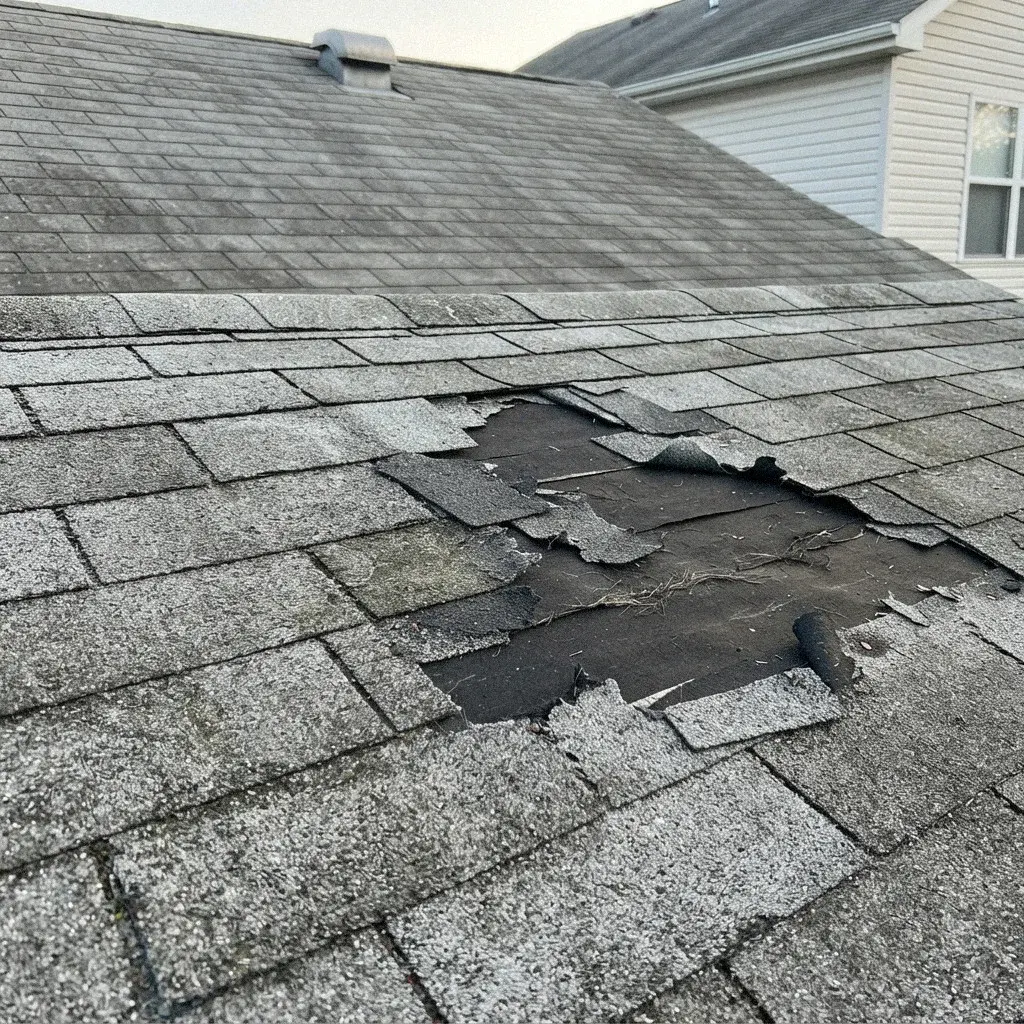
Snow Load and Roof Structure in Minneapolis
What settled snow really weighs, where drifting piles it up, and the warning signs worth watching for.
Settled Minneapolis snow can weigh 15-20 lbs per square foot, more once rained on. Minnesota's building code sets a design ground snow load for the address, and drifting against walls or dormers can double that load locally.
What Snow Actually Weighs on a Roof
A pile of fresh snow on a Minneapolis roof looks heavier than it is. Dry, fluffy snow can run under 10 pounds per square foot, but a Minnesota winter rarely leaves snow dry for long. Melt-and-refreeze cycles, rain on snow, and repeated storms packing down older layers turn light powder into dense, wet material. By late winter a deep pack on a bungalow roof in Kingfield or Longfellow can carry several times its original weight, even though the roof looks the same from the street.
Roof framing is designed to a snow load figure set by the Minnesota State Building Code, not by guesswork. That number is different depending on the address, the roof shape, and how exposed the site is, so no single figure applies to every house in Minneapolis. A licensed pro or a structural engineer confirms the design load for a specific roof rather than relying on a citywide average. Older homes near Lake Harriet or in Tangletown were built to the code in force at the time, which is a separate question from what the roof carries today.
Snow load matters most where it changes fast: a heavy early storm followed by an unusually wet system, or a stretch where temperatures hover near freezing and snow never fully sheds. Minneapolis winters routinely deliver both patterns in the same season. The load a roof is carrying in February is rarely what it was carrying in December, and it can climb steadily without a single dramatic storm. That slow accumulation is what actually stresses framing, not any one snowfall.
Drifting and Where Load Concentrates
Drifting concentrates snow in ways that flat, even accumulation never does. Wind moves snow off one slope and piles it against a parapet, a dormer wall, or the upper edge of a lower roof section, sometimes tripling the local depth in that one spot. A roof that would carry an even blanket without strain can still overload at a valley or a wall intersection where drift collects. This is why uneven snow depth on a roof, especially near a taller adjoining wall, is worth more attention than a uniform layer of the same total depth.
A lower roof set below a taller section of the same house, common on additions in neighborhoods like Seward or Powderhorn Park, catches drift shed from the upper roof on top of its own snowfall. The open ground nearby might show sixteen inches while that lower roof holds two or three times as much in the drifted zone. Multi-level rooflines, common on foursquares with rear additions, create exactly this condition, and it is a structural concern separate from the drainage and ice problems those same rooflines can create.
- A field of open snow near Powderhorn Lake or Lake Nokomis settles fairly evenly. A roofline never does, because wind carries snow off one slope and drops it against the next obstruction it meets.
- Dormers act like small dams. Snow sliding off a steep main roof piles up right where the dormer wall interrupts the slope, often two or three times deeper than the open snowpack around it.
- A lower roof tucked below a taller wall, common on additions near Kingfield or Tangletown bungalows, catches snow sliding off the upper section on top of its own accumulation.
- Wind direction off the Mississippi River corridor or open lake surfaces near Bde Maka Ska can load one side of a roof heavier than the other, even on an otherwise simple gable.
- A parapet or short wall on a flatter roof section traps drifting snow the same way a fence traps drifting snow in a yard, building depth against the vertical surface.
- None of this shows up on a snow load chart for open ground. It has to be judged roof by roof, which is why the same storm stresses one Minneapolis house and not its neighbor.
Low-Slope Additions and Attached Roofs at Risk
Low-slope roofs shed snow poorly compared to a steep gable, so they hold their full accumulated weight longer into the season. Additions, three-season porch roofs, and flat-roofed rear extensions common on older Minneapolis housing stock are frequently built to a lighter structural standard than the main house, since they were added later or built as secondary space. That combination, more retained snow plus lighter original framing, is why these sections are consistently where overload problems show up first.
Detached garages and carports face the same math with even less margin. Many were built decades after the house, sized for a car rather than a design snow load, and go unheated, so nothing inside encourages the roof to shed. A detached garage behind a home in Fulton or Cooper can be carrying a heavier proportional load than the house roof beside it, simply because its span and framing were never sized with the same load in mind. Garage roofs deserve a direct look after a heavy, wet winter, not an assumption that they match the house.
- A garage, porch roof, or three-season addition often carries less structural reserve than the main house, so a foot of wet snow can push it near its limit while the primary roof over Kingfield or Tangletown handles the same load without strain.
- Garages, especially older detached ones behind foursquares in Fulton or Longfellow, frequently carry a lower-slope roof that sheds poorly and holds snow longer than the steep-pitched house beside it.
- Carports and open-sided structures lack the interior framing of a fully enclosed room, so there's less structure sharing the load once snow starts to pile.
- Additions built at different times than the original house sometimes tie into the main structure at a point never engineered to carry a second roof's runoff and drift together.
Warning Signs You Can See From Inside
From inside the house, the first sign is usually a door or window that starts binding when it opened freely all fall. That can mean the roof structure above is deflecting under load and pulling the frame slightly out of square. New cracks where a wall meets the ceiling, especially ones that widen rather than staying hairline, point the same direction. These signs are easy to dismiss as normal settling in an older Minneapolis foursquare or Queen Anne, but a sudden new crack after a heavy snow season is a different thing than an old one that has not changed in years.
A ridge line that has started to sag, visible from the street or from an upstairs window looking along the roof, is a more serious sign than a stuck door. So is creaking or popping under load that is new and gets louder, particularly if it happens when someone walks across the attic floor or when snow is actively falling. None of these signs are things to monitor for a season to see if they get worse. They are reasons to get a look at the framing promptly, before the next storm adds more weight.
| Snow Type | Depth | Approx. Load |
|---|---|---|
| Doors suddenly binding in frames | Roof structure deflecting under load | Have it checked this week |
| New crack at wall-ceiling joint | Rafter or truss movement above | Have it checked this week |
| Visible dip or sag in ridge line | Structural overload, not settling | Leave and call immediately |
| Loud creaking or popping under snow load | Framing members flexing near limit | Leave and call immediately |
| Windows sticking on upper floor only | Localized deflection under a heavy drift | Have it checked this week |
When the Code Number Isn't Enough
There is a point where the right answer is to leave the house rather than keep watching it. Loud or continuous cracking sounds, a door that has gone from sticking to not closing at all, visible sagging that has changed in the last day or two, or any interior crack that is actively widening while you watch it are reasons to get out and call for help immediately, not to wait for morning. A roof under this kind of stress does not always give a long warning before something gives way.
If the signs are less urgent, an old crack that has not moved, a door that has always stuck a little, a slight cosmetic sag on a roof, that is is a call for an inspection on a normal schedule rather than an emergency. The distinction is change: static conditions can wait for a scheduled look, while anything actively getting worse cannot. Homeowners in older neighborhoods like Whittier or Lowry Hill East, where houses have carried decades of Minnesota winters already, are often good at telling the difference once they know what to watch for.
When To Leave And Call For Help
Reducing roof snow load yourself is not something to attempt from a ladder with a shovel, since that trades a structural risk for a fall risk on ice-covered footing. A roof rake used from the ground on a single-story section is a reasonable homeowner task on a main roof with safe ground access. Anything requiring a ladder, anything on a steep pitch, and anything on a garage or addition roof with an uncertain structural history is better handled by a licensed pro who can also assess whether the framing underneath is a separate concern.
A structural evaluation after a heavy snow season is a reasonable step even without visible warning signs, particularly for additions, porch roofs, and garages built at a different time than the main house. The pros can check what a section was actually built to carry against the load it saw that winter, which is a more useful answer than judging a roof by how flat or steep it looks. For a house near the Mississippi River or anywhere else in Minneapolis, that confirmation is specific to the building, not a citywide assumption.
What Snow Actually Weighs
- Settled snow near Minneapolis commonly runs 15 to 20 pounds per square foot, heavier once it has been rained on or gone through a freeze-thaw cycle.
- Drifting can pile snow three to four times deeper against a wall or dormer than what falls in an open field nearby.
- Six inches of fresh powder can weigh under 3 pounds per square foot, but once it settles, compacts, or takes on rain, that same depth can climb past 10 pounds per square foot on a Longfellow or Seward roof.
- Wind pushes snow off open roof planes and piles it against parapets, dormers, and taller walls, so a drift by a chimney or a lower roof section near Bryn Mawr can outweigh the even blanket covering the rest of the house.
- A sagging ridge line, viewed from the street or an upstairs window, is a visible sign the roof structure is under more load than it was built for.
- Steady creaking or popping sounds under a heavy snow load are a reason to leave the building and call a structural professional, not wait it out.
Frequently Asked Questions
How much snow can my Minneapolis roof actually hold?
There is no single safe number, because the design snow load is set by the Minnesota State Building Code and confirmed for the specific address and roof, not by a citywide average. What matters more than any one figure is whether the load has been building unevenly, especially near drift-prone walls or additions, and whether the house is showing warning signs like sticking doors or new cracking.
Why is the corner by my dormer sagging more?
Fresh powder over Minneapolis runs light, often under 10 lbs per square foot. But snow that sits through a warm spell, refreezes, or takes on rain packs down hard, sometimes topping 20 lbs per square foot before it ever looks dangerous from the ground.
Is my porch roof more at risk than the main roof?
Drifting piles snow against a taller wall, a dormer, or where a lower roof meets a higher one, sometimes three or four times deeper than what falls in the open. That concentrated pile is where a Minneapolis roof structure is tested hardest, not the flat field.
What cracks inside the house mean the roof is overloaded?
Watch a garage, porch roof, or low-slope addition first. If a door won't latch right, a window binds, or you hear steady creaking under a snow load, get everyone out and call a structural professional before you go back in to look.
When should I just leave the house and call someone?
No single number applies to every home. Minnesota's code sets a design ground snow load, but the figure that matters for your roof depends on slope, shape, and any additions, so it has to be confirmed for the specific address.
Worried About Load On An Older Roof?
Worried about a sagging ridge or a straining low-slope addition? Get a licensed local pro out to look before the next storm.
Call (612) 493-0152