Now taking calls — fast callback for urgent roof damage · (612) 493-0152
Flashing & Chimney Repair in Minneapolis, MN
Minneapolis, MN

Reflashing Chimneys, Valleys, and Sidewalls in Minneapolis, MN

Repairing the metal seals at your chimney, valleys, and walls.

Whether you're in Loring Park, Linden Hills, Fulton, or elsewhere around Minneapolis, flashing & chimney repair is arranged around the conditions on the ground in and around Minneapolis, so the plan fits the building rather than a template.

This is most often a home job — residential roofing sets out what that involves, or see commercial roofing if the property is a business or a rental.

Warning Signs

Signs You May Need Flashing & Chimney Repair

Rust Trails on the Chimney

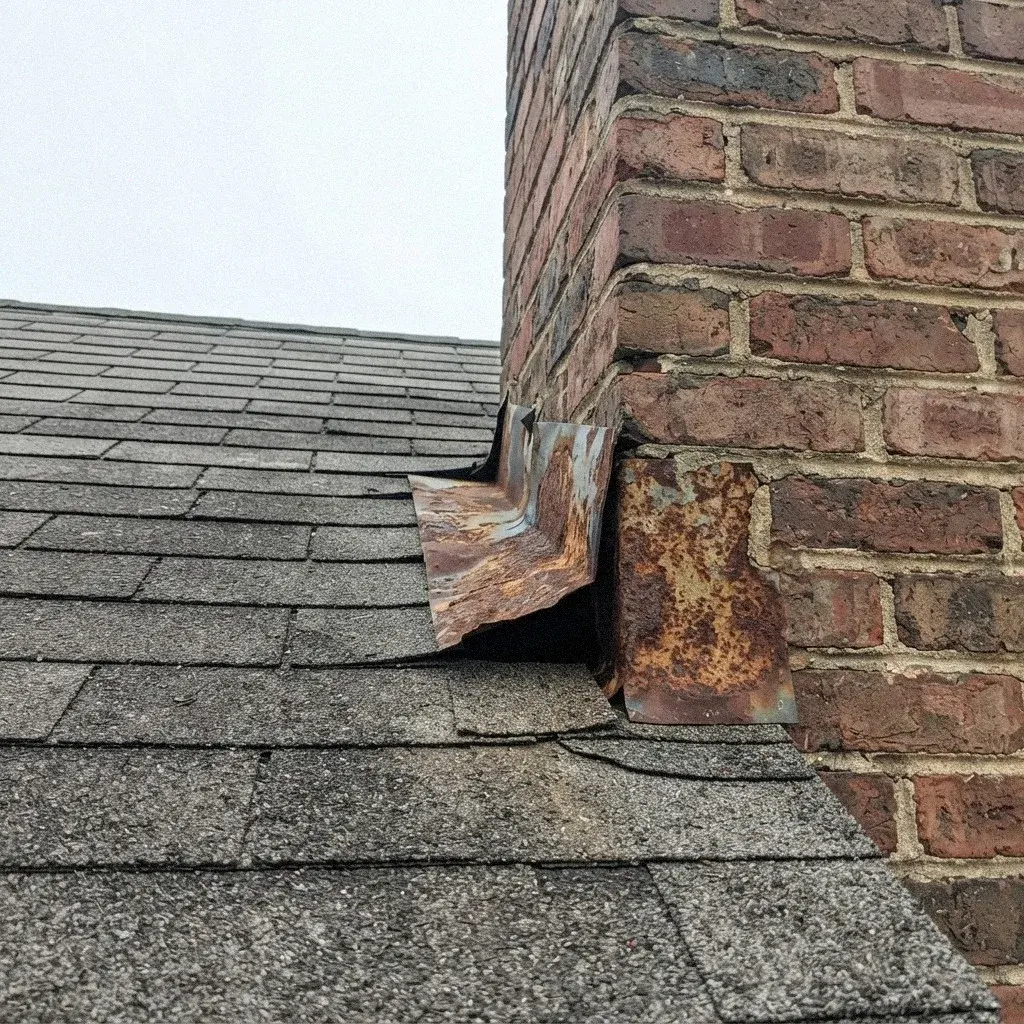
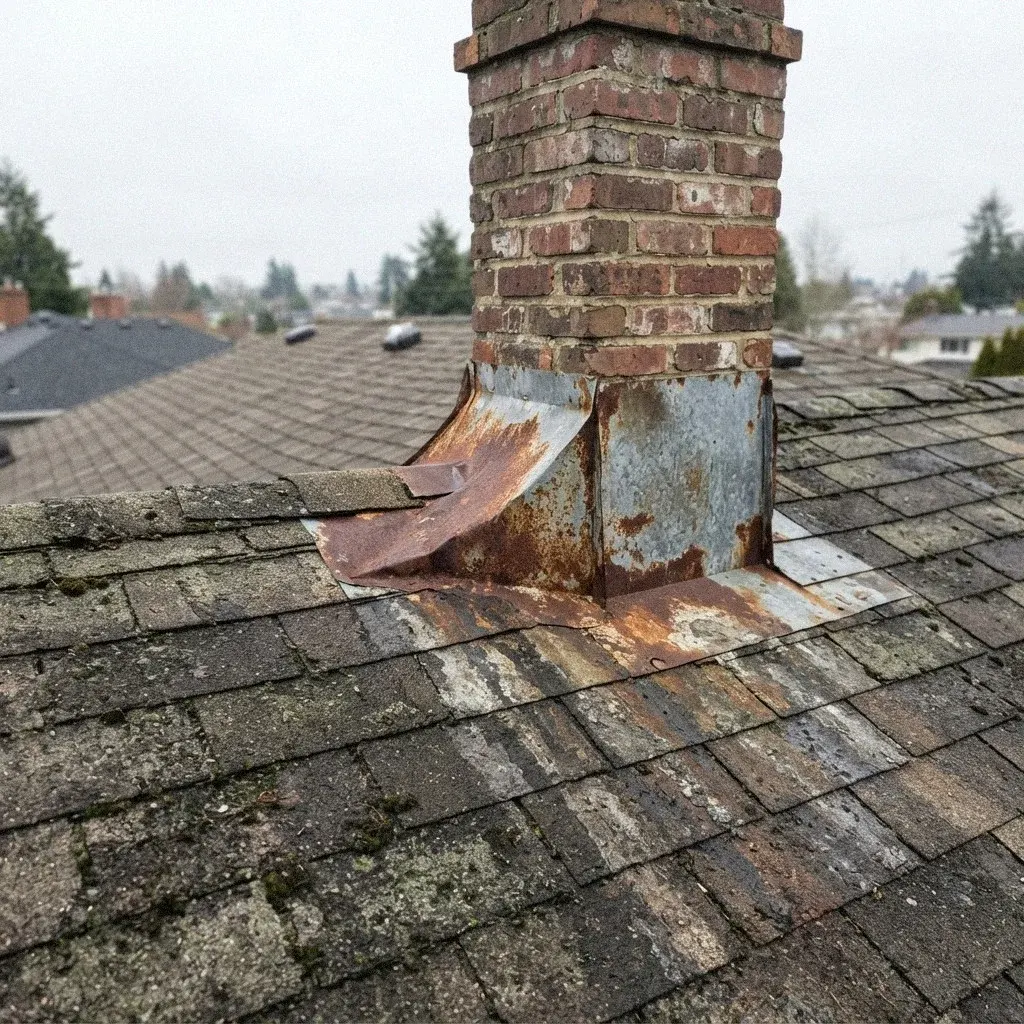
Look at the brick or block below where a chimney meets the roof plane, common on Longfellow bungalows near the river bluff. Rust streaking down the face means the counterflashing tucked into the mortar joints above is corroding and letting water track down the masonry instead of shedding onto the shingles below, a sign that's easy to spot from the ground.

Sealant Gaps at the Sidewall

Check the sealant bead where a sidewall meets the roof plane, common on foursquares near Tangletown with a dormer or bump-out. If it has shrunk, cracked, or separated from the metal, that joint is due for attention, and caulk alone will not hold once the metal has moved. The same goes for pipe boots around bathroom vents, where the rubber collar dries out faster than the shingles around it.

Ceiling Stains Near a Valley

A water stain on a ceiling near an interior chimney, or a wall stain in a room under a valley, almost always traces back to flashing rather than worn shingles. In houses with a full basement below, a slow leak at a sidewall or valley can travel along framing for a while before it ever reaches a ceiling a homeowner actually sees.

How It Works

Our Flashing & Chimney Repair Process

Inspecting Every Joint in Minneapolis

Flashing is inspected joint by joint rather than as one item: every wall junction, both sides of the chimney, the counterflashing line in the mortar, the valleys, each pipe boot and vent, the skylight curbs, and the kick-out at the gutter line. The attic underneath gets checked at the same time, since a wet path there names the joint faster than looking from above does.

Reseal or Reflash: the Minneapolis Call

Resealing is honest work when sound metal has simply lost its sealant at a joint. It is the wrong answer when the metal itself is corroded at the edges, lifted, short at the laps, or was never let into the mortar properly, and in this climate that is the more common finding. A reseal over bad metal is a season of quiet, then the same leak.

Setting New Metal and Counterflashing

New metal goes in the order water travels. Base flashing laps under the shingle field, step flashing rises course by course along the wall, and counterflashing gets set into a fresh reglet cut in sound mortar rather than smeared to the brick face. Everything laps downhill so the joint sheds rather than relying on a bead of sealant to hold it.

Final Walk Before We Leave Minneapolis

Before the job closes, water gets run over the repaired joint while the attic below is watched, so the fix is tested rather than declared. Photographs go on file, the ground gets swept for fasteners and offcuts, and anything left on the punch list is written down with a date rather than remembered.

Why this matters

Minneapolis bungalows and foursquares from the early 1900s through the 1940s carry decades-old chimney and valley flashing that outlasts several roof coverings above it. Freeze-thaw cycles and ice dams work the metal loose at mortar joints and roof-to-wall transitions long before the shingles look worn, and a basement below means a slow leak here often shows up as staining two floors down before anyone climbs a ladder to check.

Licensing & Local Standards

Code-Compliant Flashing & Chimney Repair in Minnesota

What Twin Cities Winters Do to Metal

Metal on a roof moves. It expands in July sun and contracts in a January cold snap, and over enough of those cycles the movement works fasteners loose, opens laps, and pulls sealant away from masonry. That is why flashing on a Twin Cities house tends to fail before the shingles around it do, and why a chimney reglet that was caulked rather than cut into sound mortar rarely lasts. Galvanized metal also loses its coating at the cut edges first, so rust shows up at a seam long before the sheet itself is gone. None of this is a defect; it is what metal does here, and correct detailing allows for it.

Reroofing and Chimney Flashing

Minneapolis's housing stock leans heavily on bungalows, foursquares, and Colonial Revival homes built between 1900 and the 1940s, many with masonry chimneys set into original mortar joints. Flashing details on these older chimneys were not built to today's standards, and decades of frost heave and freeze-thaw cycling have loosened counterflashing that newer homes in the metro don't yet have to deal with.

Cost

How Much Does Flashing & Chimney Repair Cost in Minneapolis?

These are the figures quoted most often for flashing & chimney repair. The size of the roof, its pitch, and how easy it is to get a ladder to move the number.

What flashing & chimney repair typically runs locally
DLI LicenseInsurance ProofPayment Terms
Paying the roofing contractor in full doesn't automatically clear a homeowner if a supplier who delivered shingles to the property, whether in Kingfield or Tangletown, never got paid. A supplier or subcontractor left unpaid can still file a lien against the house. Flashing resealed around chimney and vents, shingles left alone an estimated $245–$1805
A lien waiver from the contractor, and from any supplier who delivered material to the address, is the document that closes that risk. Ask for them at final payment rather than a month afterwards, when the crew has moved on to the next job and the paperwork is somebody else's problem. Tear-off plus soffit vents added, no insulation added above attic an estimated $350–$2470
Minneapolis requires a permit for roofing work, and it is normally pulled in the contractor's name and closed out with an inspection. That record stays attached to the property rather than to whoever lived there, so an open permit has a habit of surfacing years later during a sale. Full tear-off, deck replaced where rotted, ice barrier along all eaves an estimated $455–$3420
The paperwork behind a Minneapolis reroof, lien releases, permits where they apply, warranty terms in writing, isn't the interesting part of the job. Skipping it is how a roof that looks finished from the street turns into a dispute months later. Foursquare-scale tear-off, permit filed with the city, haul-away included an estimated $630–$4940

A bid that leaves out a permit isn't a discount, it's unfinished work. Unpermitted roofing can go uninspected, which becomes your problem later, whether at resale or when something underneath the shingles turns out wrong.

Questions & Answers

Frequently Asked Questions

Why is my flashing leaking but the shingles look fine?

Because they are two different systems doing two different jobs. Shingles shed water down an uninterrupted slope, and they are good at it. Flashing handles everywhere the slope stops: a wall, a chimney, a valley, a vent. Those joints rely on metal being lapped correctly and on sealant that eventually fails, and metal expands and contracts through Minneapolis summers and winters until fasteners work loose and laps open. So the field of the roof can have years left while the joints have already gone. That is also why most roof leaks are found at flashing rather than out in the middle of a slope.

What is the difference between resealing and reflashing?

Resealing means laying fresh sealant over an existing joint, a fix for a small gap where the metal is still sound. Reflashing means removing the old step flashing, counterflashing, or valley metal and setting in new pieces, lapped correctly under the shingles. If the metal has rusted through or pulled loose from the mortar joint, sealant on top will not hold, and reflashing is the only real fix.

Will my chimney flashing be redone during a reroof?

Often, yes. Chimney counterflashing is usually set into the mortar joints and tied into the shingles around it, so tearing off the roofing around a chimney tends to disturb it. Reusing old counterflashing after a reroof risks a joint that was already marginal failing again within a season or two, so most reroofs on a Minneapolis bungalow or foursquare include resetting it.

Will my chimney flashing get redone with a reroof?

Not automatically. A reroof replaces the shingle field, but chimney flashing is a separate repair decision based on the condition of the metal itself. If the counterflashing is sound and set well into the mortar joints, the pros we connect you with may leave it; if it's corroded or pulling loose, reflashing during the reroof avoids reopening that joint later.

Why is there a stain around my vent pipe?

That is usually the pipe boot, the rubber collar sealing where the pipe passes through the roof. Rubber goes brittle in cold and cracks at the top of the collar, and once it splits, water runs down the outside of the pipe and into the attic at that one point. It is one of the most common leaks on a Minneapolis roof and one of the cheapest to fix, provided it is caught before the decking around it softens. The repair is a new boot, not a bead of sealant over the crack, since sealant on brittle rubber lasts about one winter.

What is kick-out flashing at the gutter line?

It is a small angled piece of metal at the bottom of a roof-to-wall junction, where a slope ends against a wall above a gutter. Its job is to kick the water running down that wall line out into the gutter instead of letting it continue behind the siding. It is a cheap part and it gets left off constantly, and when it is missing, water runs down inside the wall for years without ever marking a ceiling. The tell is peeling paint or rot on the siding right below where that roof edge meets the wall. Adding one is straightforward; the wall damage behind a missing one often is not.

How much does flashing & chimney repair cost in Minneapolis?

Roofs here rarely fail from a single dramatic event. They wear down over decades of freeze-thaw cycles, ice damming along eaves, and hail from summer thunderstorms, each one loosening granules or cracking shingles a little more until a leak finally shows up inside.

Related Reading

Guides on Flashing & Chimney Repair

A roof in Minneapolis rarely gives out from one storm. It gives out from a winter that packed snow into an ice dam, then a spring thaw that found the gap that dam opened. Each freeze cycle after that widens the same weak spot until a ceiling stain finally makes the case plain.

Checking Storm Damage After Hail | Minneapolis
Local & Seasonal

Checking Storm Damage Without a Ladder in Minneapolis, MN

After a Minneapolis hailstorm, most of the real damage is on the roof, not the ground. Here is what a homeowner can check from the yard, and why the camera matters more today than it will in a week.

Read article
Where Minneapolis Roof Leaks Usually Start
Roof Problems

Common Roof Leak Entry Points in Minneapolis

A Minneapolis roof leak rarely comes from worn-out shingles. It comes from a specific joint, valley, or flashing detail. Here's a ranked look at where these leaks actually begin, from pipe boots to drip edge.

Read article
Ceiling Stain in Winter: Minneapolis Ice Dams
Roof Problems

A Ceiling Stain in January

A stain spreads across an upstairs ceiling with no rain in sight. Here's what's really happening above it, and what to do before anyone touches a ladder.

Read article
Get Started Today

Take The Next Step

This page explains what the work generally involves, but no two Minneapolis roofs age the same. A bungalow near Linden Hills with decades of shingle layers behaves differently than a roof replaced after wind damage near Prospect Park. Attic ventilation, pitch, and how much ice dam trouble a house has seen all change what this service means for your address. The licensed pros we connect you with can tell you how it applies to your roof specifically.

Call (612) 493-0152
Free inspections & same-day service available
Call (612) 493-0152 Schedule Online