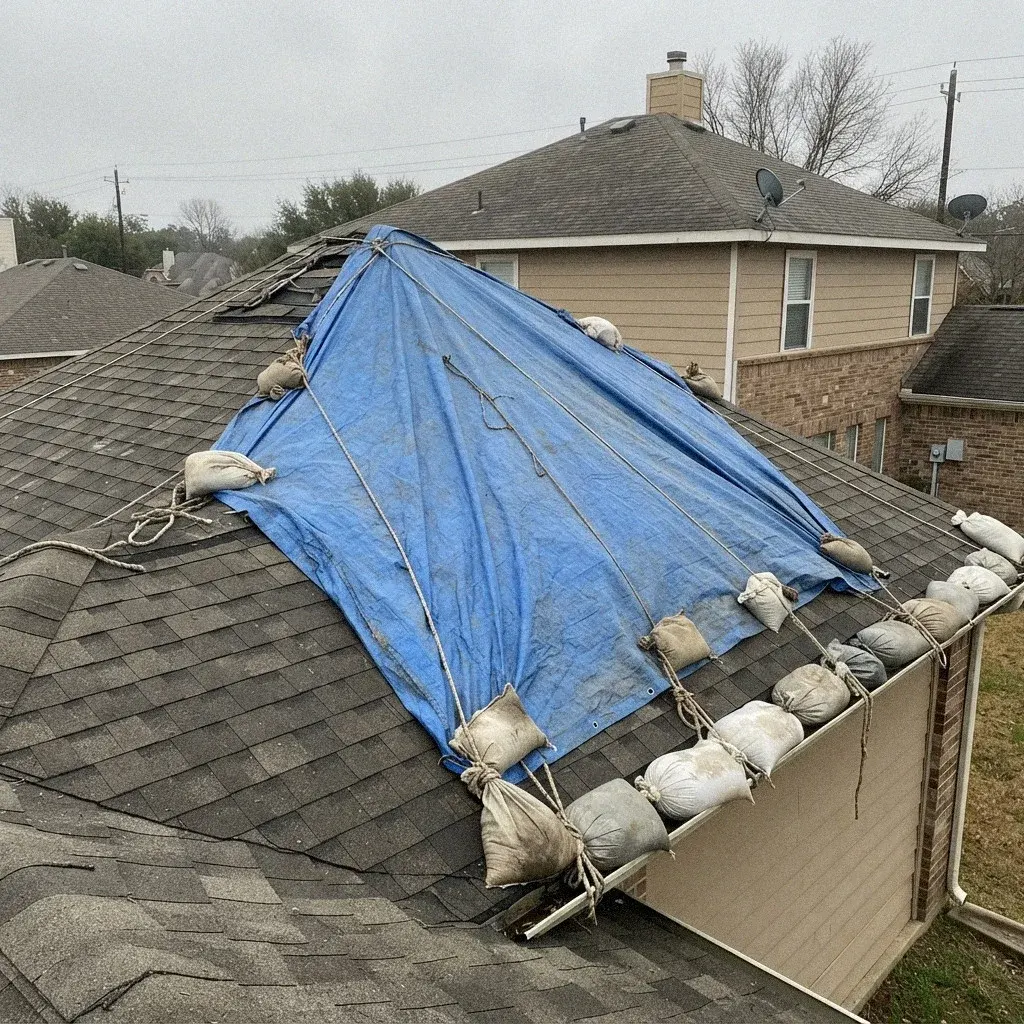
Emergency Roof Tarping
An open roof covered and anchored today, before the next rain finds it.
Learn about Emergency Roof TarpingPostwar ramblers and split-levels on curving cul-de-sac plats near Theodore Wirth Park.
Golden Valley is a separate city on the western edge of Minneapolis, with Theodore Wirth Park along the boundary between them and Bassett Creek running through. The housing leans to postwar ramblers and mid-century building on generous, often wooded lots. Being its own city, it runs its own building department, so roofing work here is filed with Golden Valley.
Freeze-thaw cycles, heavy snow load, and ice dams stress a roof more than any single storm, year over year.
Snow load and meltwater test a roof two different ways. One asks whether the framing under a house in Golden Valley can carry the weight; the other asks whether every seam can shed water sideways rather than down. A roof passes the first for years while quietly failing the second.
Bassett Creek keeps the air damp around the properties closest to it, and damp air on a shaded slope is what moss lives on. The north face is usually the one that needs clearing years before the rest of the roof does.
Winters bring the same ice dam risk as any Twin Cities roof, with heat loss along eaves melting snow that refreezes at the frontage edge; summer hail and thunderstorm wind out of severe weather season add a second, separate stress on aging shingle. Basements complicate how homeowners read roof damage here. A leak at the roofline can take days to show as a stain two floors down, so by the time it's visible inside, the water has usually been moving for a while.
Because of General Mills, there is a steady stream of non-residential work in Golden Valley. On an occupied building the constraint is rarely the roof - it is getting equipment up there without shutting the business underneath.
Most Golden Valley jobs land inside these ranges. The inspection is free and the exact figure comes in writing before anything starts.
| Service | Estimated cost |
|---|---|
| Emergency Roof Tarping | an estimated $350–$1400 |
| Flashing & Chimney Repair | an estimated $350–$1900 |
| Flat & Low-Slope Roofing | an estimated $9000–$26000 |
Theodore Wirth Park runs along Golden Valley's eastern edge, and the lots backing onto it carry the heaviest tree load in the city. Valleys and gutters on those streets fill with leaf litter every autumn, and anything left in a valley through winter is what an ice dam builds itself on once the snow arrives.
Subdivisions built up along this corridor in the postwar years carry the plainer rooflines typical of that build era, with fewer valleys and penetrations than a newer remodel would add.
Lots nearer this shoreline tend to run larger than the standard subdivision lot line inside Golden Valley proper, which gives crews more staging room than a tight cul-de-sac frontage allows.
An open roof covered and anchored today, before the next rain finds it.
Learn about Emergency Roof Tarping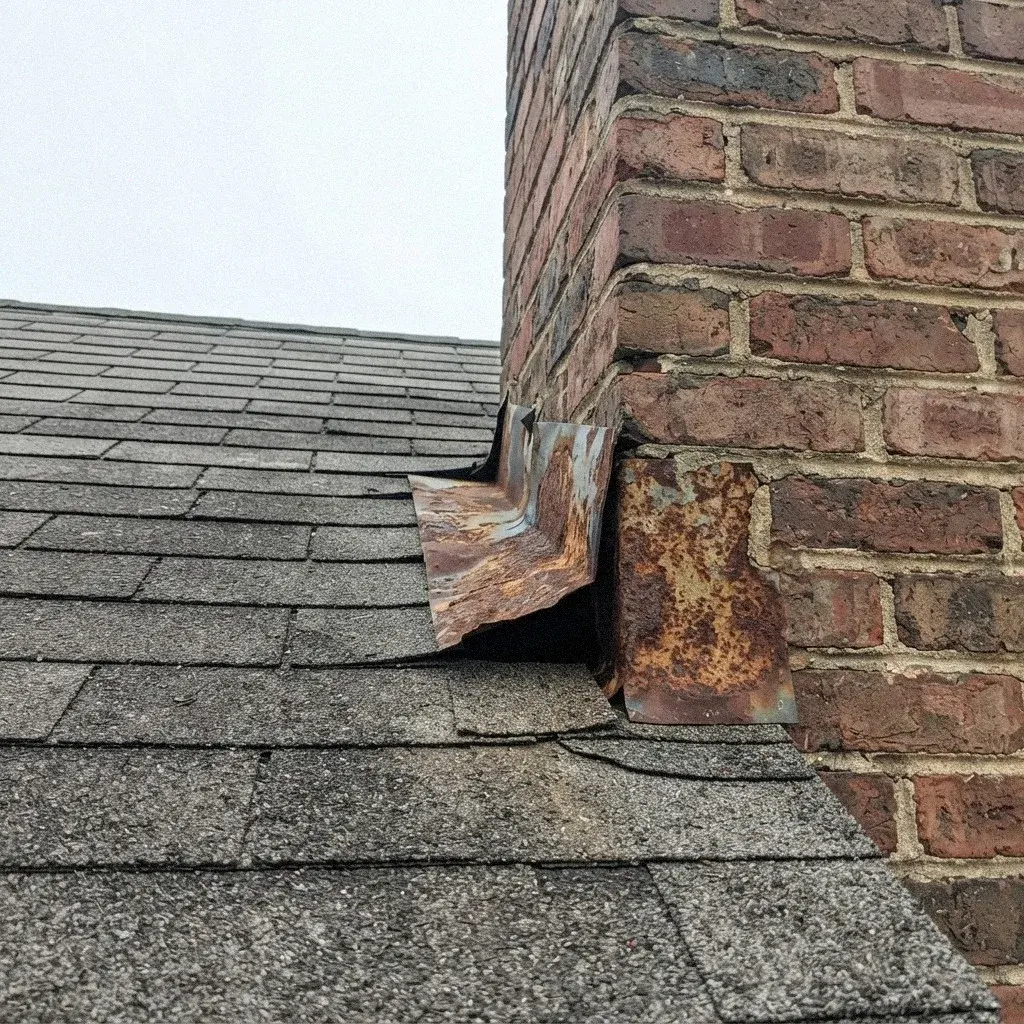
Repairing the metal seals at your chimney, valleys, and walls.
Learn about Flashing & Chimney Repair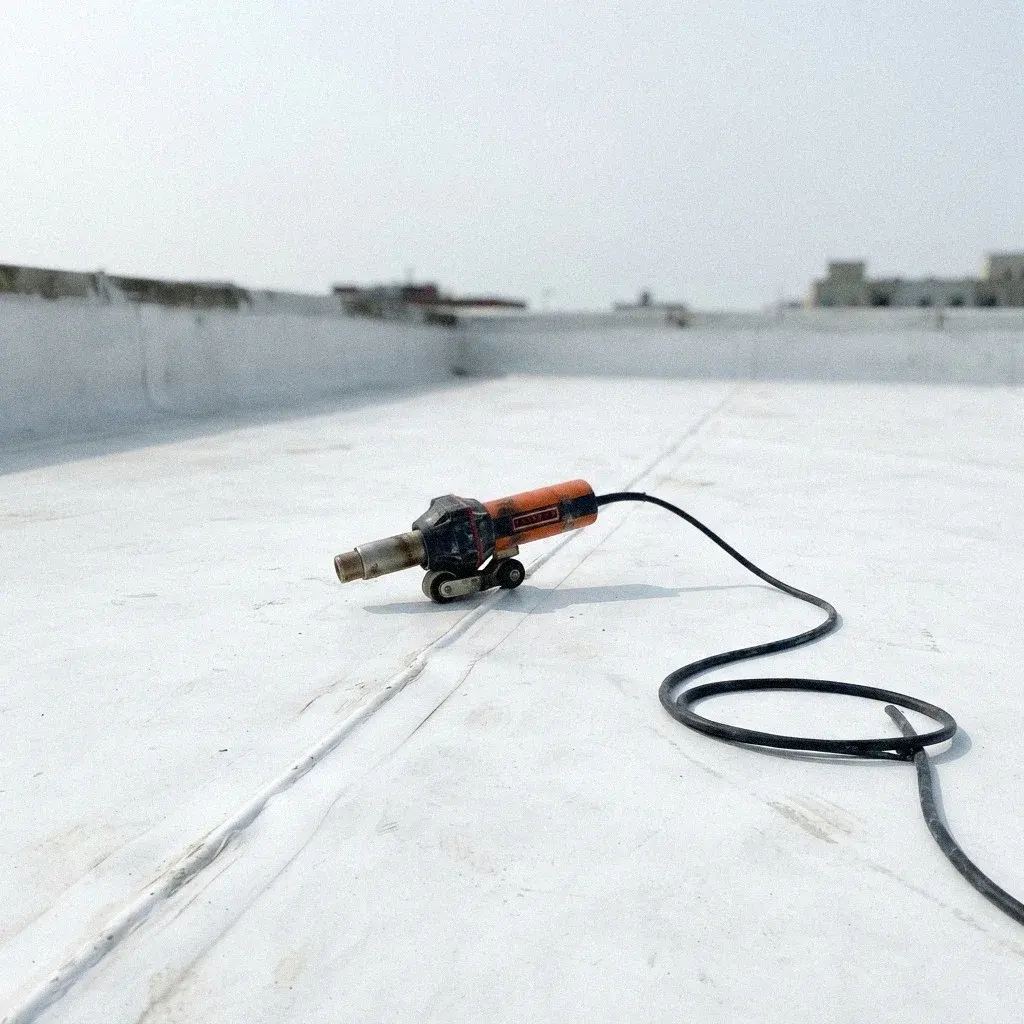
Low-slope membrane roofing built to drain through a Minnesota winter.
Learn about Flat & Low-Slope Roofing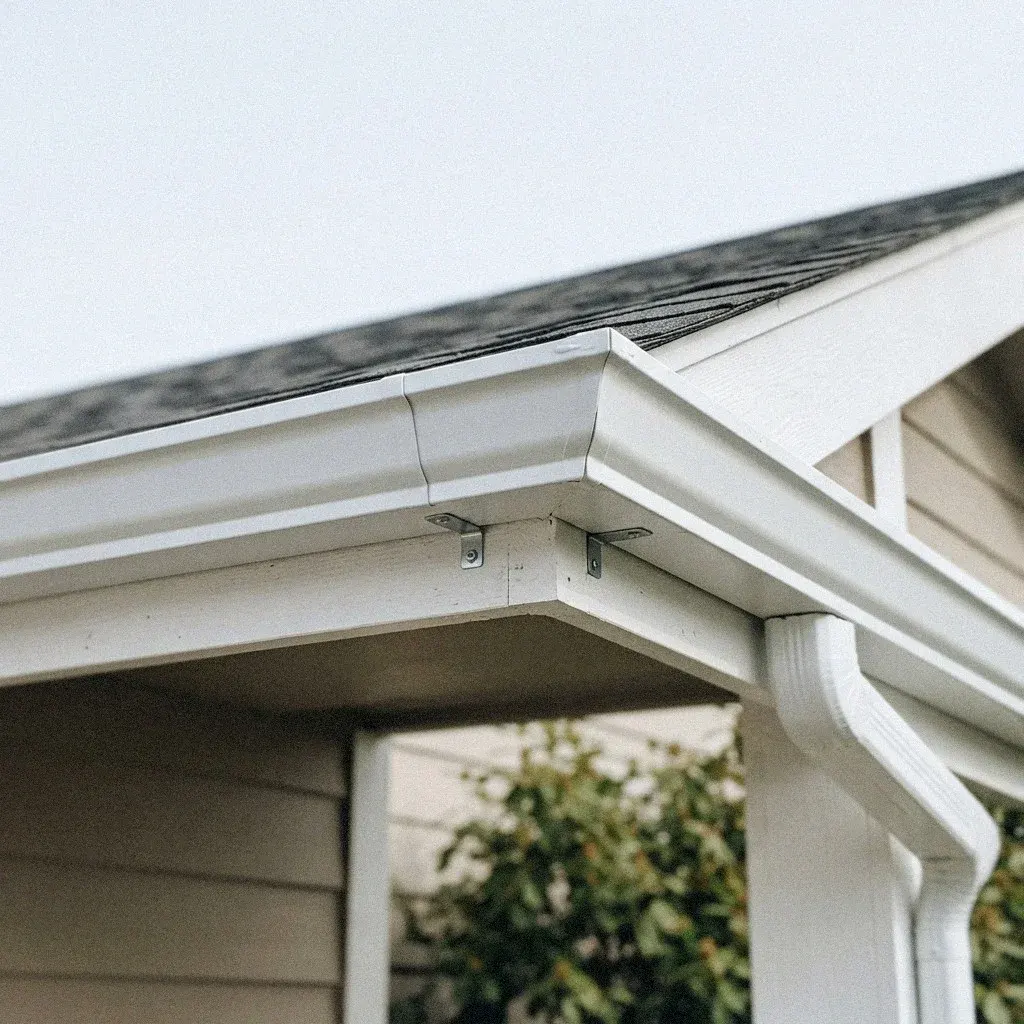
Straight talk on whether your gutters need fixing or full replacement.
Learn about Gutter Repair & ReplacementLongfellow · Edina · Bloomington · Downtown West · Downtown East · Loring Park · Linden Hills · Fulton
Once a year is reasonable, ideally in fall before ice dam season sets in. Ramblers and split-levels with shallow-pitch sections near the eaves are worth a closer look, since those low-slope runs hold snow longer and are where meltwater backs up under the shingle edge first.
Often yes. Many postwar ramblers here have simpler roof planes than a newer remodel with dormers or an addition, but original decking and lower attic insulation levels can mean more ice dam trouble even on a plain roofline, so age matters as much as roof shape.
Yes, and it is the debris more than the shade. Mature tree cover around Theodore Wirth Park drops a heavy leaf and needle load into valleys and gutters every autumn, and anything left sitting in a valley is what an ice dam starts building on once the snow arrives. The shade matters too: a north slope under that canopy holds snow for weeks instead of clearing between cold snaps. Clearing before winter is worth more here than in the open blocks.
No. Golden Valley is a separate city with its own building department, so its permit process is its own and Minneapolis rules do not apply across the boundary. This catches people who have moved out from the city and assume the process carries over. Confirm the scope with Golden Valley before the work is booked, and ask the contractor which counter they are filing at, particularly if most of their work is inside the city.
Ice dam backup at the eaves, aging flashing on 1950s and 1960s original roofs, and hail damage from summer thunderstorms drive most calls. The postwar build era means many roofs are original or on a second layover, which is when minor leaks tend to surface first.
There is a round-the-clock emergency line covering Golden Valley, so a call at 2am reaches a person rather than a voicemail. Being a short drive from Minneapolis, most standard bookings still land the same day or the next. You get an honest arrival window when you book instead of a vague promise.
Minneapolis roofs answer to the same winter, but not identically. A foursquare in Tangletown with tight attic ventilation ice-dams differently than a bungalow near Lake Nokomis with more roof exposed to open sky. Homes close to the Mississippi River gorge catch different wind than ones tucked into Fulton or Kingfield. Hail from a summer thunderstorm hits every neighborhood the same day, but the roof underneath it, its age, its pitch, its attic insulation, is never quite the same house to house.
Call (612) 493-0152