Hail And Straight Line Wind Damage
Minneapolis winters load gutters with heavy wet snow and ice for months at a stretch, and older bungalow and foursquare fascia in Kingfield, Fulton, and Tangletown was never built to hold that weight at every hanger for that long.
Boulevard trees along Longfellow and Seward drop leaves into the trough right as the freeze-thaw cycle starts, so debris and ice arrive together and pack the run solid before anyone thinks to clear it for winter.
A roof rarely fails on the day of the storm. Damage from hail or wind shows up weeks later as a slow leak, a stained ceiling, or shingles missing after the next gust. Catching it early usually means a repair instead of a full reroof.
Vetting Who Does the Work
- Location
- Along the eave at the fascia line, most visible where hangers have pulled loose or the run has begun to sag.
- Appearance
- A visible gap behind the gutter, sagging between hangers, or ice sitting heavy in the trough through winter.
- Cause
- Heavy wet snow and ice loading the trough for months, combined with fasteners set into fascia softened by years of freeze-thaw.
- Progression
- Worsens each winter as hangers loosen further, until a heavy ice load or spring thaw pulls a section down.
- Damage
- Ignored, separated gutters send meltwater and ice straight down the foundation wall instead of the yard, right where a Minneapolis basement sits below.
- When
- Late fall, before the first heavy snow, is the practical window to check hangers and fascia condition in Minneapolis. A second look after spring thaw catches whatever ice loading strained loose over the winter before it becomes a summer thunderstorm problem.
- Estimated cost
- an estimated $1200–$4800
The Damage That Happens Out of Sight
Gutter separation gets mistaken for a simple clogged gutter, since both show water sheeting over the front edge and staining down the fascia. A clog is debris sitting in an otherwise sound trough; separation is the trough itself pulling loose from the house. Get on a ladder once the gutter is empty. If it still sags, gaps behind the fascia, or moves when you press on it, the hangers or fascia have failed. If it sits tight and level once cleared, debris was the whole problem.
What Drives the Cost Up or Down
Re-securing hangers into sound fascia, or replacing a rotted section of fascia outright, resolves separation for good. Repitching the run so water reaches the downspout instead of sitting and freezing addresses the load problem at its source.
New hangers alone only hide the problem if the fascia underneath is still soft from prior water exposure. Without addressing that substrate and confirming drip edge and flashing at the roofline are shedding water past the trough, the same hangers fail again next winter.
A basement leak sometimes starts at the roof, not the foundation. Water can travel a long way down through old framing before it shows itself, so a stain on a second floor ceiling might trace back to a cracked vent boot or worn valley far above it. Tracing it takes someone who checks the roof first.
Repair it, or replace it?
| Your situation |
What normally fits |
|---|
| A single leak with a clear source | A one-off repair |
| The same leak coming back in the same place every winter | A planned re-roof |
| Anything where the sheathing is soft underfoot | Full tear-off and replacement |
Roof Tasks A Homeowner Can Handle
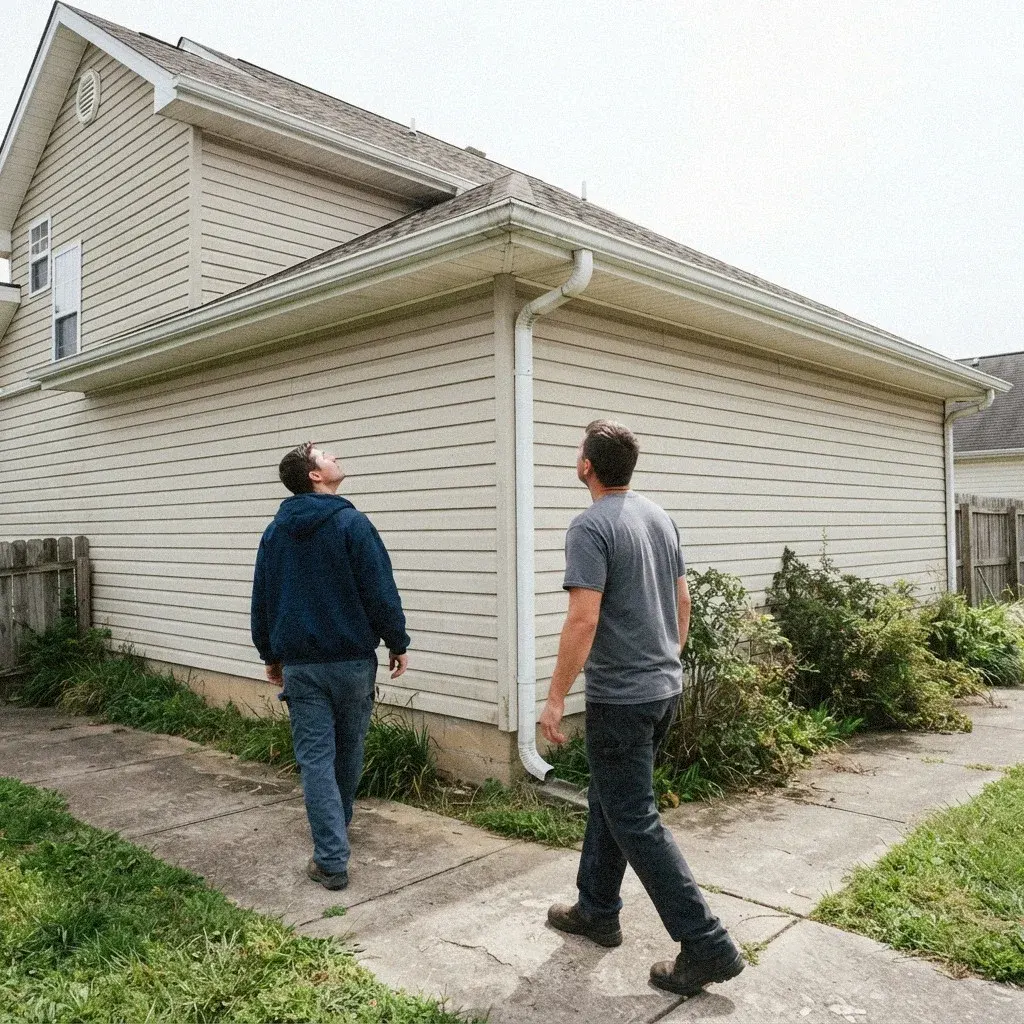
Keeping gutters and downspout outlets clear before winter is fair homeowner work from a ladder, and so is sighting along the eave from the yard in spring to see whether the line still runs straight. Once ice is loaded on a gutter it can weigh more than the ladder is rated for, and pulling on it brings fascia with it. Reattaching hangers and replacing soft fascia is for the licensed pros we connect you with.
Reading the Warning Signs on the Surface
Left alone, separated gutters dump meltwater and ice-dam backup along the foundation wall instead of away from it, which matters directly given the basements under most Minneapolis homes. The fascia keeps softening underneath until hangers have nothing sound left to hold onto.
What Is Your Roof Actually Telling You?
Most gutter separation and ice loading jobs in Minneapolis land between an estimated $1200 and $4800, and the roof decides where inside that. Minneapolis winters kill off the insects that drive roofing costs elsewhere, so a licensed inspector isn't pricing carpenter ant or wood-boring damage here. What shows up instead near Longfellow or Kingfield bungalows is ice dam rot at the eaves and nail corrosion from decades of freeze-thaw. That's a moisture and age question, not a pest one, and it changes what actually gets quoted. pricing guide.