Apartments & Multifamily
Multifamily Roofing
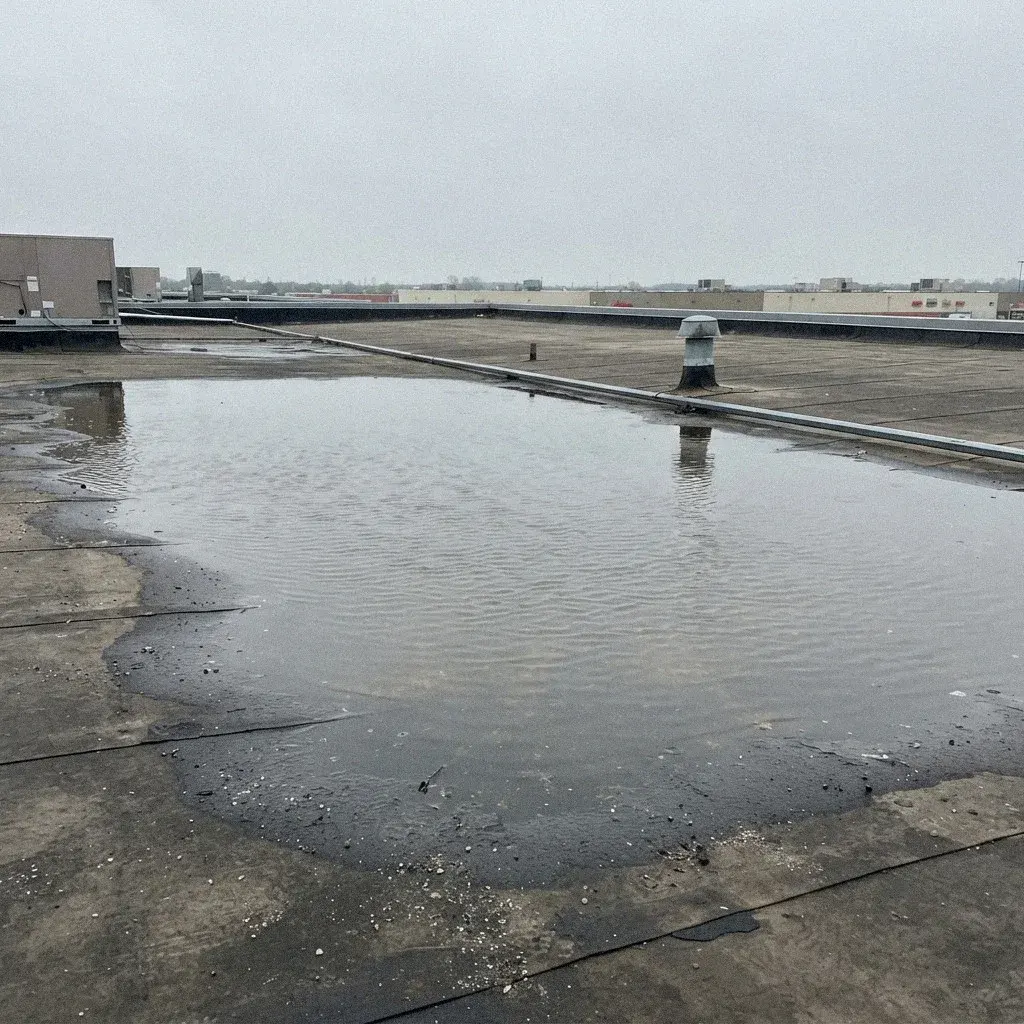
Condo and HOA roof work a Minneapolis board can review, phase, and fund without guessing.
Condo and HOA roof work in Minneapolis runs through the board, so it needs a condition report before a budget, one written scope every bidder prices against, and a phasing plan if reserves cannot cover every building in one year. Owners see the same document the board votes on.
A condo or HOA roof in Minneapolis is not one owner's call. Governing documents usually name the roof a common element, sometimes a limited common element where it ties to one unit's balcony or patio cover, and the homeowners association board, not a single resident, decides when and how it gets fixed.
Which document controls depends on the association's declaration and any maintenance agreement filed alongside it. Some Minneapolis buildings, especially converted properties near North Loop or older stock in Elliot Park, split responsibility differently than a newer development in Longfellow or Linden Hills, so the board has to check its own paperwork before assuming anything.
None of that paperwork changes what a Minnesota winter does to a shared roof. Ice dams back up water at flashing and valleys, and a spring hailstorm can mark every building in a complex the same afternoon. A board near the Chain of Lakes or along the Mississippi River still has to move before a small leak becomes a ceiling repair in six units.
Boards do not sign off on roof work the way one homeowner signs a contract. A written scope of work has to hold up at an owner meeting, get compared against other bids, and match what the management company can actually administer. Without that document, three roofers can walk the same building in Tangletown or Kingfield and price three different jobs.
Bid comparison only means something when every bidder priced the same roof areas, the same flashing detail, and the same assumption about deck condition underneath. A board reviewing bids for a building near Powderhorn Park or Seward needs each proposal broken down the same way, or the lowest number on paper is really the thinnest scope, not the best deal.
| Factor | Board Needs | Single-Owner Job |
|---|---|---|
| Who approves it | Board, per governing documents | Individual unit owner |
| How it's funded | Reserves or special assessment | Owner's own funds |
| Who reviews the scope | Board and management company | Owner alone |
| What drives timing | Roof asset condition report, reserve study | Owner picks the timing alone |
| Required disclosure | Full membership notified at owner meeting | No membership involved at all |
| Governed by | Declaration, bylaws, maintenance agreement | Owner's own insurance paperwork |
| Who takes the calls | Management company routes everything to one contact | One owner, no routing needed |
| How the job gets staged | Split by building, timed to reserve draws | One roof, one pass, done |
Reserve funding exists to make a roof replacement a scheduled expense instead of an emergency vote. A reserve study done a few years ago for an association in Fulton or Bryn Mawr may already be behind what current roofing costs actually run, especially after a hailstorm moves through the metro and every contractor's calendar fills at once.
Special assessment sequencing is a separate decision from approving the roof work itself. Owners in a building near Lake Harriet or Bde Maka Ska want to know not just what they owe but whether it is due in one payment or spread across several, and the board has to settle that before the contract is signed, not after.
Phasing across buildings is how an association matches roof work to the money it has, not the money it wishes it had. A complex with several roof sections near Diamond Lake or Keewaydin rarely replaces everything at once; the board picks the building losing the most water first and schedules the rest as reserves or assessments allow.
Downtime on a condo roof is not lost revenue the way it would be for a business, but it is weeks of scaffolding, tear-off noise, and debris chutes for people living underneath it. A board in Whittier or Lowry Hill East has to warn owners what the building will sound and look like before work starts, not during it.
Many Minneapolis condo and townhome associations mix a pitched shingle roof over the main structure with a flat or low-slope section over a garage or connecting walkway. Those areas fail on different timelines, so a phasing plan built for a property near Prospect Park or Cedar-Isles-Dean often treats the flat sections as their own separate project.
A roof asset condition report gives a board something an owner's comment at a meeting cannot: a dated, building-by-building record of actual condition across the whole association. For a multi-building complex near Lake Nokomis or Cooper, that record is what turns a phasing plan from a guess into a schedule tied to real wear.
That same documentation protects the board afterward. If a unit owner in Lyn-Lake or Uptown questions why reserve money went to one building's roof before another, dated photos and a written condition report answer the question directly instead of leaving the board to explain itself from memory at the next owner meeting.
Getting a bid comparison and a phasing plan in front of a board starts with a scope document built from actual roof conditions, not a template pulled off a shelf. That means someone walking every building an association owns, not estimating from a single unit's roof and assuming the rest match.
Whether the association sits near Theodore Wirth Park, along Minnehaha Creek, or closer to the Mill District, the process starts the same way: confirm what the governing documents call a common element versus a unit owner's responsibility, then build the scope, the bid comparison, and the phasing plan around what that document actually says.
Phasing matters when a Minneapolis association holds more than one building on its lot, a layout common near Cedar-Riverside and parts of Elliot Park. If the reserve study cannot fund every roof at once, a written scope of work should break the project into stages tied to what the association can actually pay for, not just which roof looks worst.
Ice dams do more damage over a winter than most homeowners expect, backing meltwater under shingles near the eaves until it finds a seam and drips into insulation. The freeze-thaw cycle repeats for months, so a small stain in January can mean saturated decking by March.Linden Hills, Fulton and Kingfield. Roof damage around here rarely announces itself. A gutter pulls loose under snow weight, a flashing seam opens a hair, a vent boot cracks with age. Small openings sit quiet through a dry stretch, then a heavy rain or thaw finds them and turns a minor gap into a repair bill.
Roof problems here rarely announce themselves outright. They show up as a faint water stain on a ceiling, granules collecting in a gutter, or a shingle edge lifting after a windy stretch. Catching these early is cheaper than waiting for a leak to reach the drywall.No two roofs near Bde Maka Ska or out toward Tangletown price the same, because the number follows what the shingles and decking show once someone's actually up there. A foursquare with original flashing reads differently than a re-roofed bungalow near the Mississippi River. Get the estimate from what's on the roof, not a guess from the street. pricing guide, and the commercial overview covers how a scheduled program works.
Multifamily Roofing
Commercial Roofing
In most Minneapolis condominiums the roof is a common element, so the homeowners association carries the maintenance, repair, and replacement duty through reserve funding or a special assessment, not the individual unit owner. Whether a specific section counts as common or limited common element still depends on the association's governing documents, which the board should keep on hand for owner questions.
No single state form settles this for a Minneapolis association; it comes down to the declaration and bylaws recorded for that specific building. Those governing documents define what counts as a common element the whole association funds versus a limited common element tied to one unit, and boards should read them before promising owners an answer either way.
A reserve study estimates when a Minneapolis association's roof will need major work and how much should be set aside now rather than later. When reserve funding has fallen behind that schedule, which happens often, a special assessment becomes the way the board closes the gap instead of delaying a roof that is past due for replacement.
Bring a written scope of work built for that specific building, not a generic quote request, and have every bidder price against the same document. A bid comparison only means something when the numbers cover identical materials and labor; otherwise the board is comparing assumptions, not actual costs for the Minneapolis property in question.
Bring your board a written scope of work and a phasing plan the licensed pros we connect you with can bid against.
Call (612) 493-0152