The stain usually shows up on a ceiling under a slope, near an exterior wall, in a bungalow or foursquare anywhere from Linden Hills to Longfellow. Outside, it's well below freezing and nothing has fallen from the sky in days. That gap between dry weather and a wet ceiling is the first clue. Whatever put that water there came from snow already sitting on the roof, not from rain, and it moved before it ever reached the ground.
Why There's No Rain to Blame
Snow melts on a roof even when the air outside is nowhere near 32 degrees, because heat leaking up from the living space below warms the roof deck from underneath. That meltwater runs downhill under the snowpack, refreezes once it reaches the colder eave overhang, and eventually finds a gap in the shingles to get through. None of that needs an actual storm. A quiet, clear week in Minneapolis is enough.
What To Do In The Next Few Hours
Inside, the priority is the water, not the roof. Move anything valuable out from under the stain, set a bucket or a tarp if it's actively dripping, and if the ceiling is bulging rather than just discolored, poke a small controlled hole at the low point so it drains into a container instead of collapsing on its own. That protects the floor and the drywall while the actual source gets sorted out.
Staying Off The Roof
Whatever is happening above that stain, it isn't a job to walk out onto right now. A snow-covered roof in Minneapolis hides ice underneath, the pitch on most bungalows is steeper than it looks from the ground, and a fall from that height doesn't need much snow load to happen. Leave the roof itself alone until someone qualified is looking at it, even if the stain is spreading while you wait.
Leave The Hammer Inside
It's tempting to go after visible ice at the eave with a hammer, an axe, or anything else swung hard enough to break it loose. Don't. Shingles under that ice are already lifted and vulnerable, and a tool aimed at the ice just as easily cracks the shingle, punches through the decking, or knocks gutters loose. The ice didn't cause the damage by sitting there; removing it wrong causes more.
What A Licensed Pro Checks First
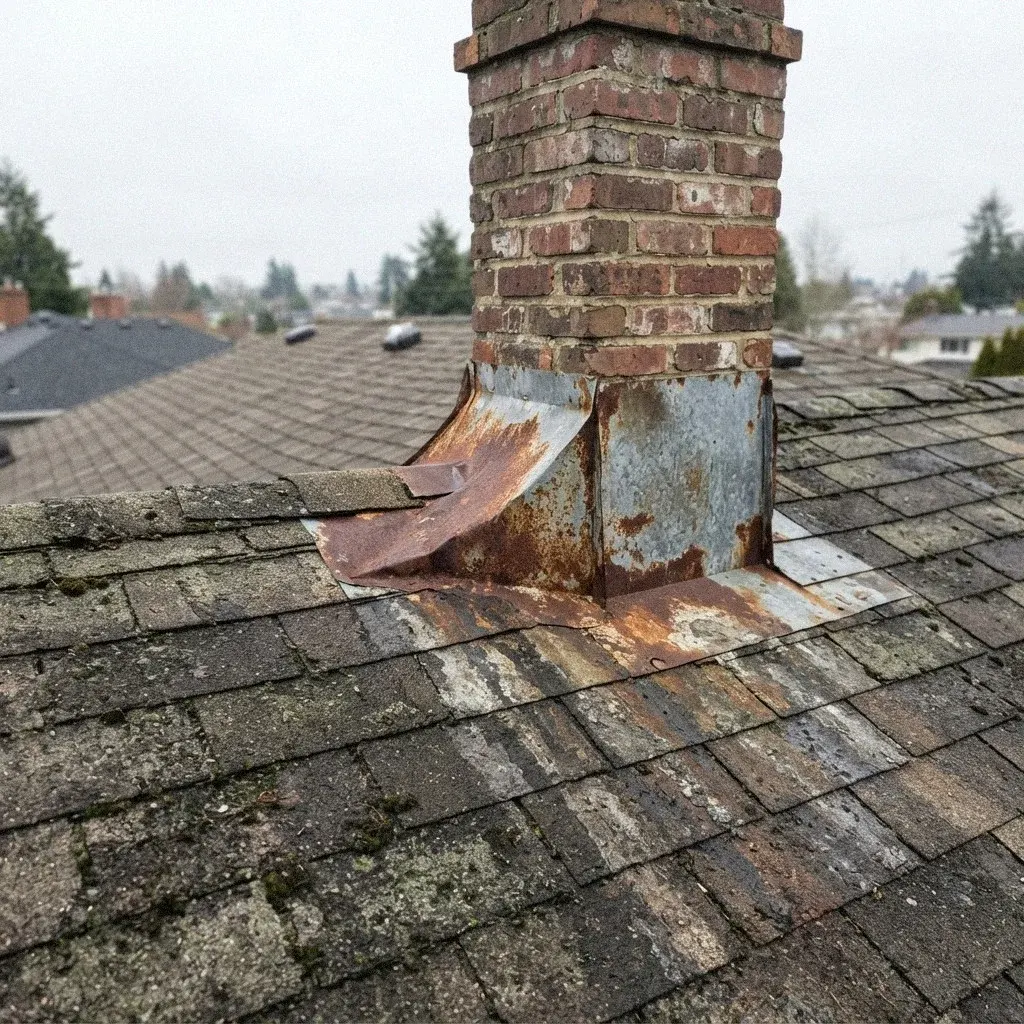
Once someone is safely up there, the first job isn't fixing anything, it's finding where water actually got in versus where it's just pooled. That means checking flashing around any roof penetrations, looking at the shingle courses near the eave, and tracing the stain back along the ceiling joists toward its real entry point. The licensed pros we connect you with start there before anyone talks about repairs.
One Stain, More Than One Spot
A single stain on a bedroom ceiling doesn't mean only one spot on the roof is affected. Water can travel sideways along a joist or a layer of sheathing before it ever drips through drywall, so the visible mark and the actual entry point are sometimes feet apart. Homes near Lake Harriet and Bde Maka Ska see the same pattern as anywhere else in the city; the stain tells you water got in, not exactly where.
Basements Aren't The Same Problem
It's worth separating this from basement moisture, which is a near-universal fact of life in Minneapolis homes built with full basements dug to frost depth. A wet basement wall usually points to grading, gutters, or groundwater near the foundation. A stain on an upstairs ceiling in January, with dry weather outside, points up at the roof and the attic above it instead. Different water, different path, different fix.
Why Timing Makes This Common
This pattern shows up across the metro on the same kind of week: cold enough for weeks that snow has piled up, then a stretch of sun or above-freezing daytime temperatures without any rain at all. Neighborhoods with a lot of older housing stock, from Seward to Tangletown, see it repeat almost every winter because the roofs and attics were built to an older standard than current code expects.
Photographing The Damage
Before anything gets patched or painted over, take pictures of the stain, its size, and anything visibly dripping or discolored, along with a timestamp if the phone adds one automatically. That record is useful later regardless of whether an insurance claim ends up involved, and it gives whoever inspects the roof a clear sense of how the damage looked before repairs started covering it up.
When To Call Rather Than Wait
A small stain that isn't growing can probably wait for daylight and a normal weekday call. Active dripping, a ceiling that's visibly sagging, or water finding its way near outlets or light fixtures changes that. Electrical risk from water intrusion isn't something to sit with overnight. In those cases, contacting the licensed pros we connect you with the same day is the safer call, not an overreaction.
The First Hour Under That Stain
The stain itself is just evidence. What matters in the next few hours is protecting the inside of the house, staying off a roof that isn't safe to be on, and getting someone qualified to look at what's actually happening above the ceiling before guessing turns into a bigger repair than the leak alone would have caused.
Dealing with this in your home?
Minneapolis roofs carry the weight of two seasons pulling in opposite directions. Bungalows near Kingfield and Longfellow trap heat in poorly vented attics, melting snow that refreezes at the eaves into ice dams. Come summer, hail off a Hennepin County thunderstorm can strip granules city-wide, no matter the neighborhood.